 University of North Texas

Madison O'Connor
Something Unexpected:
Madison O’Connor’s time in Moldova (2018-2020)
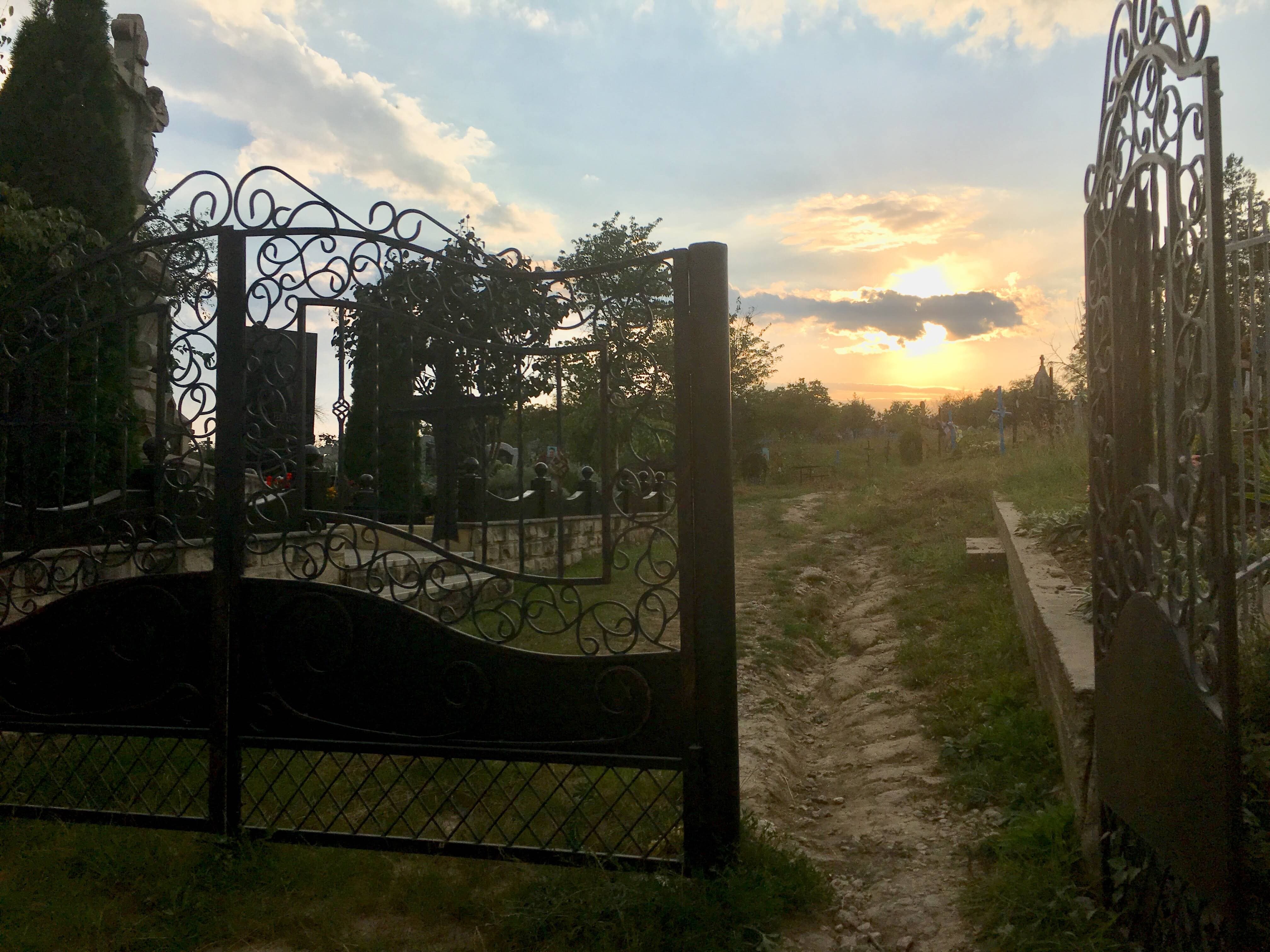
The cemetery that Madison lived next to during her time in Peace Corps.
Next to Madison O’Connor’s host home was a cemetery, and while her daily walk through the grounds may sound creepy in the U.S., in Moldova, it was joyful. There, death, even at a gravesite, is a celebration of life, and there were many times when her shortcut resulted in free food and treats from funeral parties.
It was only a 20 minute walk to work each morning, but her path to working in the Peace Corps started much farther away.
On a church mission trip to Swaziland in high school, O’Connor met two Peace Corps volunteers who introduced her to the program. The volunteers talked with O’Connor throughout her mission trip, and she left knowing that Peace Corps service was something she needed to do eventually.
While attending UNT, O’Connor majored in integrative studies with a focus in non-profit leadership. She picked up practical classes that taught her skills she would need when she pursued service.
When O’Connor studied grant writing with a professor who happened to be a returned Peace Corps volunteer from Costa Rica. She took the coincidence as a sign to complete her application, and her professor wrote her letter of recommendation.

A view from the village Madison lived in during her time in Peace Corps.
The pieces fell into place very quickly.
“I think this is the perfect time for me to build my career of wanting to really help someone,” O’Connor remembers thinking, as she approached graduation. “Not only help someone, but make a big difference.”
While her parents knew O’Connor wanted to serve, they began to grow nervous as her departure date approached.
“A lot of it came down to being a single woman in a foreign country,” O’Connor said. “Peace Corps really does make sure, not only you’re safe, but you have all of these protocols to stand by.”
She even questioned the decision herself when she received the acceptance, but ultimately decided to pursue the unique opportunity.
“It’s normal to kind of question it, but don’t allow the fear to stop you from making a life changing decision,” O’Connor said.

Madison led many projects in the community, inviting local children to participate.
O’Connor took off to Moldova to begin her training. For the first three months, she studied Romanian and learned about the many skills she would need to help out her host communities.
As she began her service, O’Connor first lived with a bunica, or grandma, who hosted her in Chiscareani, Moldova.
“It was a lot of dinners and breakfasts hanging out with [the bunica’s] friends, which were a bunch of older adults, and them trying to find me a husband,” O’Connor said, laughing.
The village was small and during the summertime, life moved slowly. O’Connor slept late in the mornings, and, when she woke up, she helped the bunica in the garden. In the winter she shoveled snow and tried to not slip on the icy ground.
O’Connor applied her non-profit leadership skills by working in Community Organizational Development. While every day of her service varied, she often, she worked across government buildings, the library, and the community center.
She assisted social workers with home visits, helped librarians organize books into a digital system, and led after-school groups. She organized women, older adult, and even exercise groups. She also created support groups and initiated social-emotional learning practice.
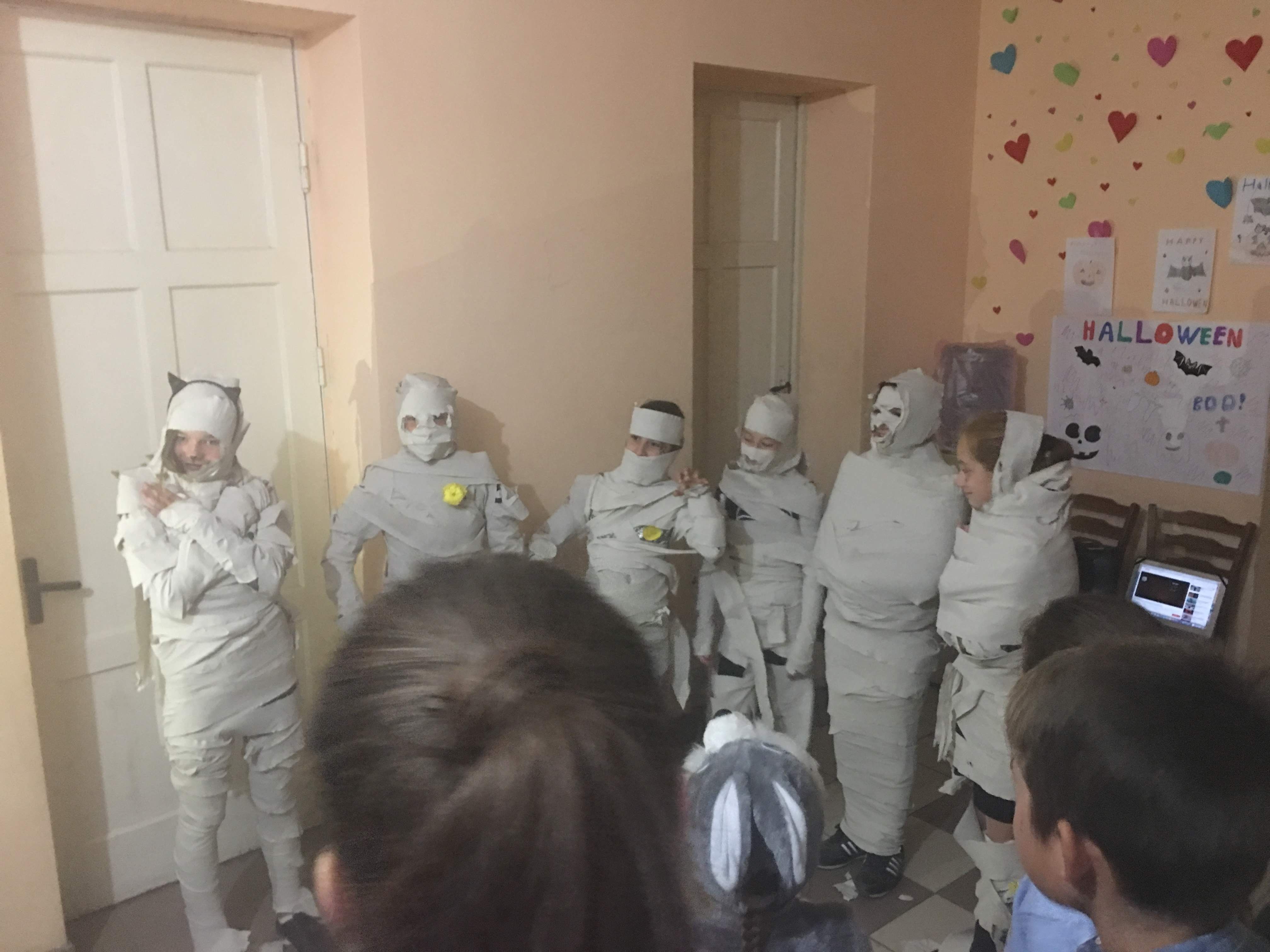
Madison educated local children on the musings of Halloween, dressing them as mummies
and teaching them about the American tradition of Halloween.
Although she was well prepared for her COD work, O’Connor found the cultural adjustment to be the most difficult part of service. While she eventually integrated, the first few months were trying.
“It can get a little isolating,” O’Connor said. “It took a lot of uncomfortable, putting myself out there, being a little awkward with my Roma-English, and really building those connections.”
One way she built connections was by getting to know many of the teenagers in town through her groups and by helping them with their college essays. On her daily walk to work, she often made a pit stop at the school to say hello to the students. She still keeps in contact with many of them to this day.
Halfway through her service, O’Connor moved to a new village, Straseni, with a very different host family. The young couple that O’Connor lived with for the remainder of her service led a much more contemporary life-style, so she was able to learn new things about Moldovan culture from a different point of view.
Unfortunately, the end of O’Connor’s service came at a chaotic time. The COVID-19 pandemic began along the war in Ukraine. Moldova welcomed Ukrainian refuges, but, three months before her service would have ended, O’Connor was evacuated due to the quarantine period.

Madison got to know many Moldovans, focusing on the Community Economic Development
work sector.
Like many volunteers, O’Connor found the culture shock of returning to the U.S. to be much more difficult than starting service. While Moldova is a collective community the U.S. is much more individualistic.
“That was a really hard adjustment,” O’Connor said. “No one really cared about asking you how your day was and getting to know you.”
O’Connor connected to a RPCV support group that she met with annually to discuss all of the experiences they uniquely shared as service members.
When she returned, O’Connor worked for the U.S. Small Business Administration before earning the Coverdell Fellowship which financed her Master’s in Social Work at New York University, a field she came to appreciate during her time in Moldova.
“I found this love in something I would have never even known if it wasn’t for Peace Corps,” O’Connor said.
If you would like to learn more about Madison's story, you can e-mail her here.
Written and Edited by Eliana Fulton, B.A. Journalism Student at UNT
Interviewed by Zach Yeager, Peace Corps Prep Coordinator