 University of North Texas

Pam Wharton
Facing Challenges and Building Flexibility:
Pam Wharton’s Time in Huai Yung, Thailand (2011-2013)
Pam Wharton’s time in the Peace Corps kick started her international development career. It gave her international work experience and knowledge about Southeast Asia that she could not have gained otherwise and ultimately led to where she is today.

Pam create lesson plans in conjunction with the local pre-school teacher, utilizing
donated books.
Although it was a beneficial experience in many ways, it was also one of the most difficult things she’s ever done. She learned versatility by facing challenging situations and, as Peace Corps promised, it was the toughest job she ever loved.
“It was one of the hardest things to do and bluntly it was a little bit traumatizing at times—and I think everyone should do it,” Pam said. “Something where you are having to live outside of your bubble, trying something new, and building strength that you never knew you had.”
After graduating from UNT with her Master of Public Administration, Pam went to work for the U.S. Department of Labor in Denver, Colorado. When she decided she wanted a career change into international development, she found that most positions would require at least two years of experience working abroad.
“I was very much in that category of over-educated, but under-experienced,” Pam said.
Many of her new friends in Denver had already served in the Peace Corps, so she decided to pursue the experience.
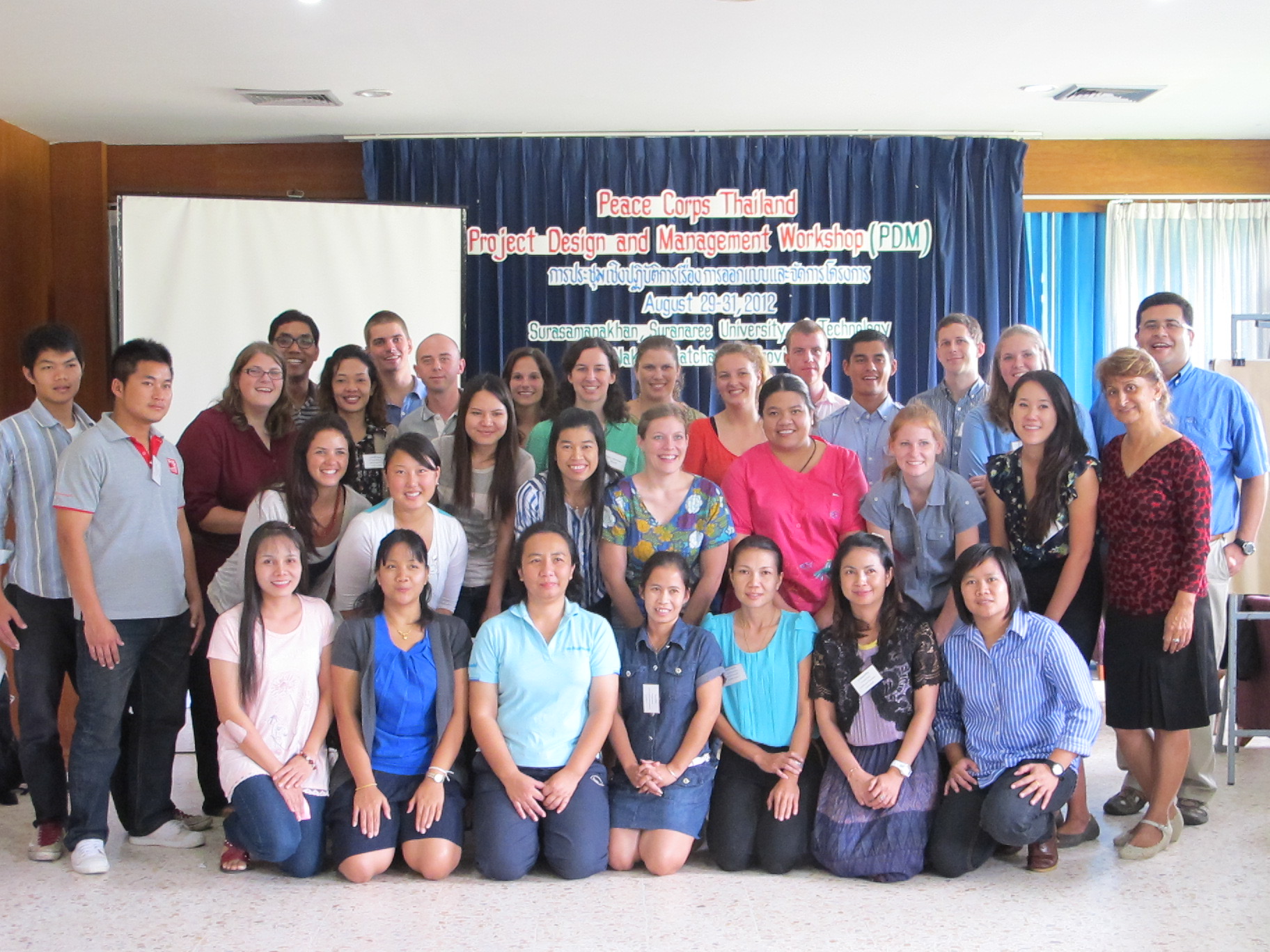
Pam and other Peace Corps volunteers and their local counterparts hosted a Project
Design and Management workshop.
While she could not choose where she would go or what position she would fulfill, she knew she had to go, and in pre-departure training she learned that she would serve in Thailand.
“Embrace the ambiguity,” one of the Peace Corps training staff told her.
As a Type A person, she wasn’t prepared for just how vital that mentality would be.
Pam served in the south of Thailand as a Community-Based Organizational Development Volunteer. She was the only volunteer in her village, and she had to work hard to learn the difficult language. The Thai language has five different tones and if a word is said short or long it can have a completely different meaning.
“Somehow all of the helpful words that I needed to know on a day-to-day basis, if you said them the wrong way were either a cuss word or a bodily function,” Pam said, laughing.
At the same time, she found that, unlike herself, productivity was not her community’s top priority. The Thai people began by getting to know her by having a meals with her, or attending weddings and funerals together. While she introduced herself by talking about work, they asked about her family.
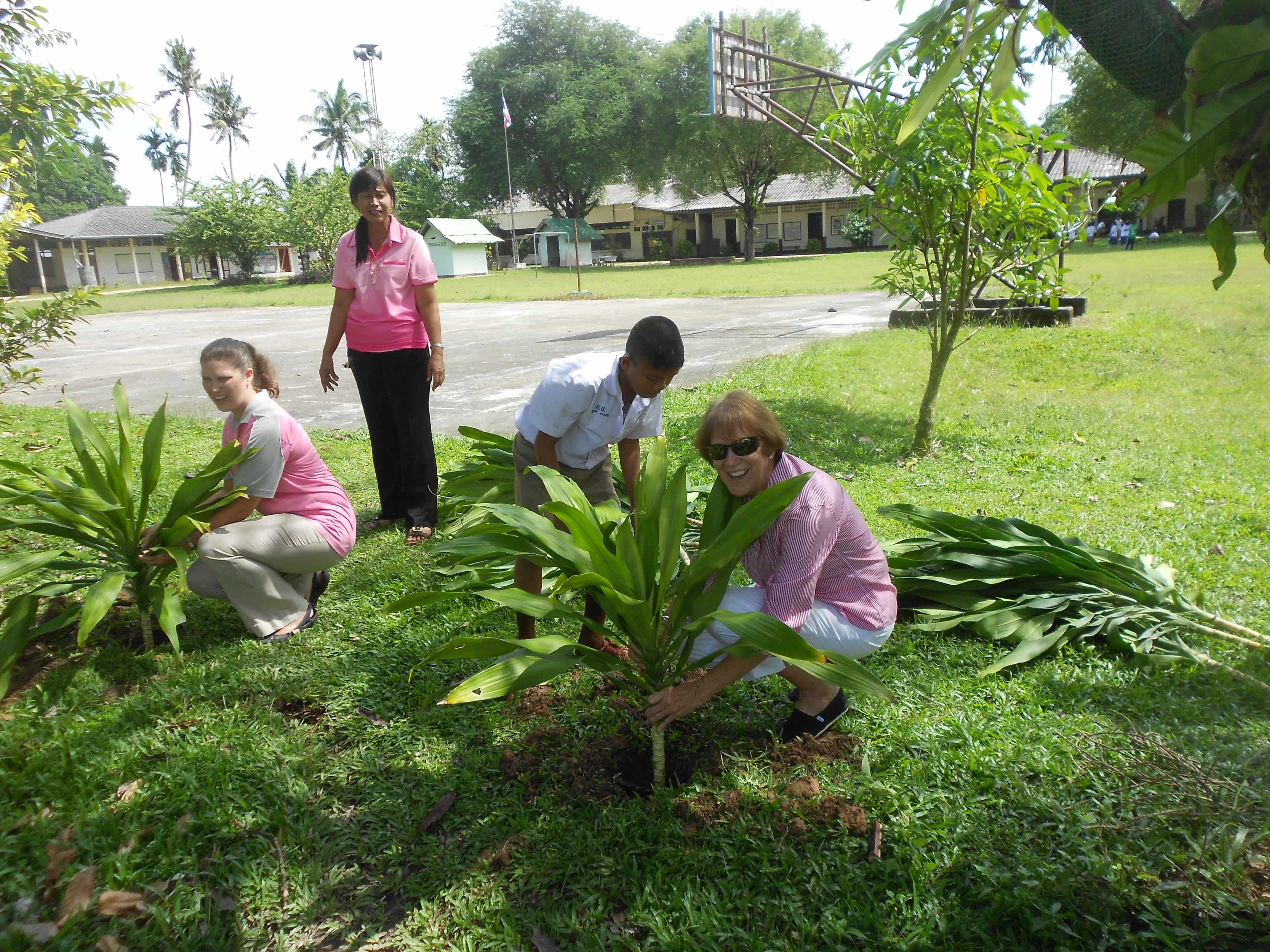
When Pam's mother visited Thailand, she helped plant a tree at a local school.
“It was a good reminder that there are other things that are more important,” Pam said.
Although she wasn’t always sure what people were saying, she came to enjoy spending time with her community and learning about the culture. Still, she was eager to find opportunities to be helpful, but had a hard time finding a counterpart in her village that wanted to work on a project.
To appease her Type A personality, she joined several Peace Corps committees that helped other volunteers design projects and apply for grants with her extra time. She also spent some days going to the preschool to read books to the children or taking blood pressure at the local health center.
One project she was especially proud of was helping facilitate a camp for young girls. She and her fellow volunteers taught the young girls about personal safety and female empowerment.
“By the end of the day the girls had this whole women’s-strong chant that they were saying,” Pam recalled, fondly.

Loy Krathong is an annual festival of lights where people float small decorated baskets.
Socially, it took time for her to build connections with the host-country nationals as they didn’t have great experience with western tourists. After almost a year of staying in the village, they trusted her solidarity, but she was still frustrated with her lack of productivity.
“Finally somebody had said to me, the first two goals, 66% of this, is the country getting to know Americans and you getting to know the country and only a third of it is about the work,” Pam said.
Once she knew that, she embraced the experience of getting to know the people around her and let go of some of the stress of working. She prioritized intentional relationship building, an important part of service, by simply talking to food vendors and people at local businesses.
On the days she felt less social, she took walks through the rubber plantations and palm oil trees or rode her bike through town to say hello to her neighbors.
Six months after returning to the U.S., Pam found a job through a Peace Corps job fair in international labor rights, specifically working on projects in Southeast Asia. The skills she developed in relationship building were an important part of her resume that helped her succeed at the job.

Peace Corps Volunteers celebrated 50 years of Peace Corps Thailand with the Princess
of Thailand.
“Building relationships is everything,” Pam said. “There’s plenty of people who have the technical knowledge, but if you can’t build the person-to-person relationship with either who the grantee is or who your donor is…that makes such a difference.”
She also benefitted from her knowledge of the region and understanding of adapting to a foreign culture.
“You can always tell if people have not lived abroad, or not worked in different cultures,” Pam said. “They figure things out, but the experience is things that just can’t be taught in a classroom. You have to go and live it.”
Interested in learning more about Pam's story? You may reach out to her here.
Written and Edited by Eliana Fulton, B.A. Journalism Student at UNT
Interviewed by Zach Yeager, Peace Corps Prep Coordinator