 University of North Texas

This interview was conducted by UNT graduate student Lou Tonge for the Bhagwan Adinath Animal Humanities Initiative in partnership with the UNT Oral History Program. It has been edited for length and clarity. All photos courtesy of Alastor Van Kleeck.
Lou Tonge: Alright. So, good afternoon! It is Tuesday, August 18th, and this is an oral history with Alastor Van Kleeck of the Microsanctuary Resource Center, in collaboration with the UNT Jain Studies Animal Humanities Project. Alastor, if you wouldn't mind telling me a little bit about yourself, where you live, and where you're from, and anything else that you would like to share about your background.
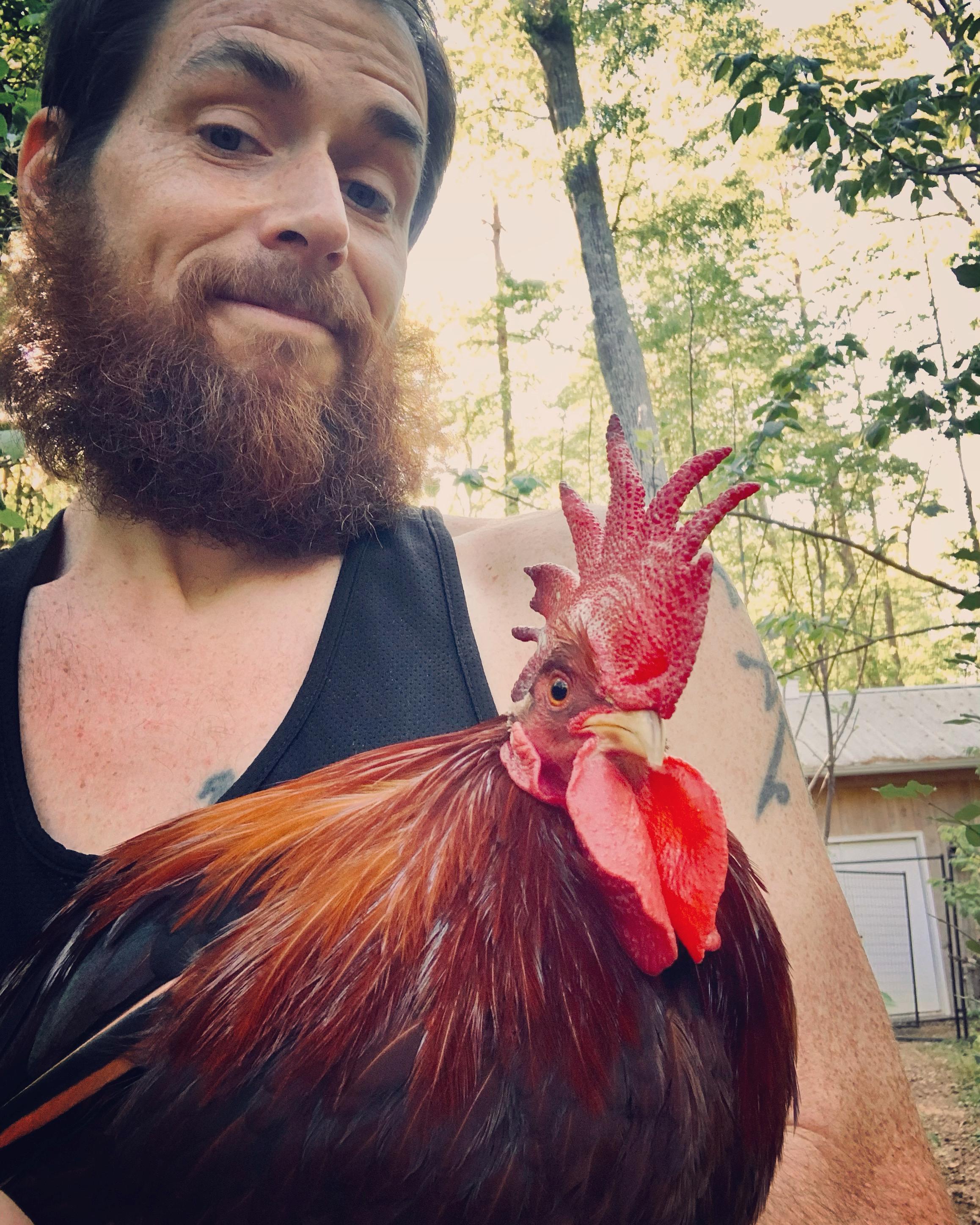 Alastor Van Kleeck: Sure, yeah, so, currently living in Chapel Hill, North Carolina, sort of the central
North Carolina region. I'm originally from Virginia Beach, Virginia, so Southeast
Virginia, so kind of a lifelong resident of the Southeast and Mid-Atlantic area.
Alastor Van Kleeck: Sure, yeah, so, currently living in Chapel Hill, North Carolina, sort of the central
North Carolina region. I'm originally from Virginia Beach, Virginia, so Southeast
Virginia, so kind of a lifelong resident of the Southeast and Mid-Atlantic area.
I have been vegan since 1999. I was a sophomore in college, and I'd been vegetarian for a couple years before that, and, you know, I've just always… I have early childhood memories where I remember feeling a strong affinity towards animals and just feeling really passionate about animals' safety and well-being and, you know, just thinking about, how to live a life that's causing less harm for animals. And so, going vegan was something that I thought about, from the perspective of, “I know that my choices in life will cause impacts on others.” And when it comes to animals, like, what is the choice that I can make that is going to be the one that causes the least amount of suffering?
I remember very clearly thinking about that aspect of, “what lifestyle choice, is most likely to reduce animal suffering?” I had found out about veganism after being vegetarian, like I said, and I didn't have any familiarity with veganism, before finding a pamphlet on campus, and, you know, it sparked within me the opportunity to think about, well, I made the decision to go vegetarian in order to reduce animal suffering, but you know, is that enough? Like, if I care about animal suffering, doesn't that kind of obligate me to think about the choices that I'm currently making, and if there are changes that I can make? So, it was a very easy decision to go vegan, and I've never looked back. I think I missed yogurt for maybe a week or so, because this was 1999; we had brown soy milk, and that's about it, and so there wasn't any vegan yogurt yet or anything like that. I was also in Blacksburg, Virginia, I was at Virginia Tech, which is in the rural areas of Virginia, so I was lucky to find a health food store that had, like, you know, soy milk, and I think they had, maybe like, Rice Dream products and stuff like that. But yeah, I never looked back, and it was very much an ethical calculation for me. Like, I want to be making ethical choices in how I live my life, and especially when it comes to animals, and going vegan was a big step in that, and it's been kind of the central core of who I am in my entire life ever since that point.
I guess as far as background goes, I pursued a PhD, and finished that in 2006, and it was in English literature, but in the later years of my graduate work, I started getting interested in environmental activism, and thinking about climate change and the impacts of human civilization on the environment, and the impacts that that would therefore have on the animals who live in the world. It was, again, so many of my choices have been, like, “what are the impacts ultimately going to be on animals?” So, I became very interested in environmental activism and decided, after I finished my PhD, to leave academia, and look for opportunities to do work in the world that was more social justice oriented and mission-driven, and kind of looking for things that would have a positive impact directly.
Since then, a lot of the work that I've done in terms of nonprofit work and vegan activism and stuff like that has been kind of coming from that decision. And, in 2014, my partner and I decided to get into doing rescue work for farmed animals. My partner had been doing cat and dog rescue for a number of years, when we got together, and then, you know, I kind of happily came along in that. We started noticing the farmed animals who were showing up in local county animal shelters. And when we noticed that, we really noticed that there weren't any people, like, advocating for them, or trying to find them safe homes that would get them out of the farming system. And so, we started doing rescue and placement for farmed animals in late 2013 and early 2014.
Then, when we rescued two hens from a local shelter for the purpose of doing a placement, we fell in love with them and decided at that point that, instead of kind of kicking the can down the road continuously in terms of rescuing chickens and starting to care for chickens, we decided to go ahead and keep them and find a way for them to become members of our family. And that's really where the ‘microsanctuary’ concept started was from those two hens, whom we fell in love with. Clementine and Amandine were their names. They were two Buff Orpington hens.
We lived on a small property outside of Chapel Hill. We're on 3 acres. And, we didn't look like a traditional sanctuary. Like, nothing about our property looked like a traditional sanctuary, like, you know, a Farm Sanctuary or a Woodstock sanctuary that are big and live at or own old farming properties and have large pastures and all these sorts of things.
We were very much thinking about it and said, well, “we have dogs and cats who are parts of our family, now we have two chickens who are part of our family.” We also very much saw ourselves as wanting to provide sanctuary, because when it came to farmed animals, you know, doing rescue work was very much becoming part of the farmed animal sanctuary movement. And so, my partner came up with the idea of us being a micro-sanctuary, because we looked so different from every other place that we knew, but we also recognized that our goal was to do the same work as a large sanctuary, which was to provide lifelong care, the best quality of care to the survivors of the animal agriculture system. And so, the rescue of those two hens started our sanctuary work and our farmed animal rescue work.
Then, they also were the inspiration for the microsanctuary idea, and from that grew microsanctuary Resource Center. And yeah, 12 years later, here we are, so… It's obviously a very direct path from going vegan in 1999 to where I am now.
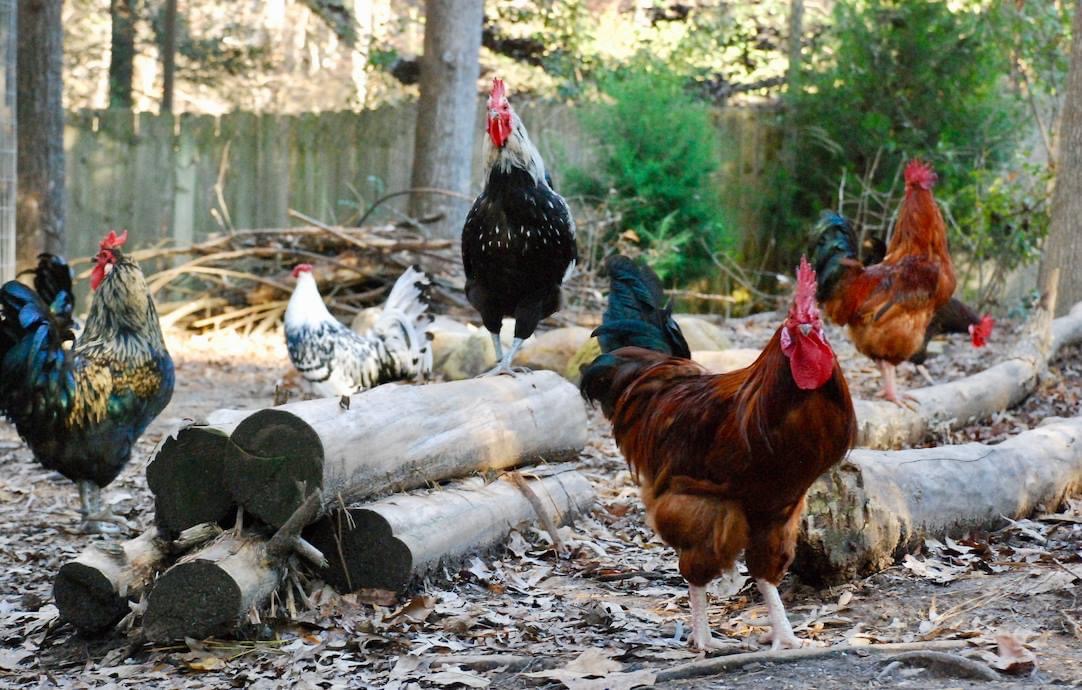
LT: Certainly, yeah. It's really cool and interesting that the two chickens, the two hens were the catalysts for that. So my next question was actually gonna be, do you live with any animals or operate your own micro-sanctuary? So I guess, who do you have at your home, or in your family now?
AVK: Yeah, we did a lot of rescue work after those two hens, and we grew pretty big, just especially doing rescue work for local roosters who were abandoned in the woods and at shelters and stuff like that. So currently, we still have a population of chickens, both roosters and hens. They're all very old at this point, so we're pretty much closed for intake and just allowing for our residents to kind of live out their lives, because as they get older, their energy isn't as high, and they're not quite as kind of all over the place. But, you know, they also need kind of more individualized care and monitoring and their individualized living spaces. So, we've adapted our sanctuary to fit the changes in our resident population. But yeah, so we still do have chickens.
We also care for a few cats and dogs, and pot-bellied pigs, we have a few of those as well. So yeah, our sanctuary is still very much in operation, but it's mostly older residents now and we're not actively doing new rescue, just because, in terms of time and energy and financial commitments required for the current population, we want to make sure everyone has what they need, and so that means kind of closing down for intake.
LT: Yeah, that's understandable.
So, we covered this a little bit, but my next question was going to be that I would love to hear about how you first got involved in funding and providing resources for other sanctuaries and micro-sanctuaries. What does that work look like on a day-to-day level?
AVK: So to start with the funding for other sanctuaries—that really grew out of a couple of things. One is, I was doing a lot of work, before and during our getting started with sanctuary work, with A Well-Fed World, which is a nonprofit organization that does a lot of work on plant-based hunger relief and other environmental projects around the world. And, they have had a grant program, like, a small grant program going on for a long time. Initially, they were doing grants for some animal rescue-related works and stuff like that. Working closely with the founder of A Well-Fed World, and also recognizing when we got started that there were just so few opportunities for farmed animal sanctuaries to find grants, and other funding, outside of doing just asking for donations and stuff like that, I really saw just how much of a need there was for these grant opportunities for sanctuaries. A little can go a long way with providing funding for places to do a small project, or to meet a veterinary bill or something like that. And so, we started the MRC grant program in 2016.
Shortly after we kind of started our sanctuary and stuff like that, we got the funding to do a grant program. Our first grant ever was to a Norwegian chicken rescuer to do hormonal implants for her hens, to help relieve some of the stresses of egg-laying on some former battery cage hens. Really the idea was just…from my experience of seeing how few funding opportunities there were and then trying to find ways to help other sanctuaries that were kind of in a similar situation to us.
As far as the day-to-day work goes, so it's kind of—and I'll touch on this a little bit later when we talk about the ethics of care—the work that MRC does to create a community around sanctuary work for vegans who want to do this on various scales, and to support sanctuaries of all sizes, which really grows out of our direct hands-on work with the animals at our sanctuary, the residents. I think, basically my day-to-day work is kind of a combination of things, which is doing the chores around the sanctuary—so I lay eyes on every single resident every single day, monitoring their health status, cleaning and keeping up with them and stuff like that—so, just a lot of hands-on work with our residents on a day-to-day basis. Whether that involves socializing, whether that involves, like, health checks and just monitoring… There's always poop to clean up, things like that. You know, a big chunk of my day is just involved in the day-to-day operations of the sanctuary, which is really all about resident care and stuff like that.
Beyond that, with MRC, you know for a long time the day-to-day work has been involved with running our grant program, and interacting with our grantee community, and things like that, and then also working on our outreach and education resources. It kind of waxes and wanes in terms of the workload for that, but really the two kind of go hand in hand, where everything that I do at the sanctuary feeds into what we do for MRC's work, whether that's doing grants or doing outreach and education. The two really inform each other, and I think that's actually really important, just because so much of what we believe at MRC is really just about how the residents of sanctuaries and the individuals who have survived animal agriculture should inform so much of what sanctuaries do, and how they do outreach, and the types of education they provide, and the stories that they share. Ultimately, the residents of the sanctuaries are the ones who are really the central part of all this stuff, and the primary focus of what we're doing. So, that's pretty much how those two work together for me.
LT: Great. You just touched on this in your answer, so it's a nice segue. Care as both theory and practice is the central ethic that really drives my own work, be that both research and practical work with animals. In my dissertation, I'm exploring care as something that, although is central to many human-animal relationships, it does look very different and it takes very different shapes in different contexts. How does care factor into the work of the Microsanctuary Resource Center and your work at home with the residents that are part of your family?
AVK: Yeah, so this is a really interesting question, and I also think it's a really important one, and it's multifaceted. So, for us, the theory and philosophy of the ethics of veganism has a component that, at least, should be informed by an understanding of who the victims of exploitation are. That can mean a lot of things, but I know for me, my veganism meant something different after we started doing farmed animal rescue and hands-on caregiving. Like, I was always vegan for the animals, but I don't think I really understood what that meant until I started to get to know the animals in question. It gave it so much more… It became less of an abstract idea or theoretical framework, and it became very much more an idea that, tying back to what I said earlier, the choices that we make have direct impacts on individuals, and going vegan has direct impacts on individuals like the people who are now members of my family. There’s a direct one-to-one relationship between the choices I make and what chickens in battery cages are experiencing and stuff like that. I think especially because so many of us in Western society don't grow up with any understanding of who farmed animals are—animal agriculture very deliberately sets up a lot of distance and boundaries between us as consumers and the animals who are the consumables in our current system—we can, as individuals in Western society, and human civilization in general, very comfortably go through our day eating animal products left and right, and not have any understanding of what that means for the individuals who are caught up in the system.
And so, I really reframed animal agriculture not as a system that, you know, slaughters trillions of lives every year, but as a system that causes suffering for individual animals trillions of times over. Really seeing it as the experiences of individuals who are being exploited by and harmed by these systems and by the choices that we make as individuals. And I think that that really is very much tied to the centrality of care, into these ethics of veganism and the way that that I understand them now, because, at sanctuaries, you're looking at individuals. You're not looking at masses, you're not looking at quantities, you're looking at individual animals and the needs that they have, and dealing with their personalities, dealing with their sicknesses and their injuries and their treatment plans and recoveries and all that sort of stuff.
When you have the opportunity to care for farmed animals, you start to see the individuality of farmed animals, and you recognize that animal agriculture is causing harm to individuals, just that they're doing it trillions of times over every year. And so, that's a big part of it, is just really reframing what veganism is, and letting caregiving inform the ethical choices of veganism and what those mean, and how those are framed. When it comes to then doing vegan activism, I really feel strongly for sanctuaries that it's important to maintain the centrality of individuals in the messaging and in the education that we do. I've always defined sanctuary—vegan sanctuary—as being something that, on one hand, rescues individuals, but on the other hand, frames that individual rescue and care within the context of a liberation effort whereby our goal is to end the system that causes these individuals to be exploited and to need rescue and care work to be done.
I really think it's important for us to allow the animals we care for to be known by others, and to have their stories told. And so, when we do our work as caregivers, so much of that is getting to know the residents as individuals, and then I think we can turn around and kind of talk about them as individuals and represent them as individuals.
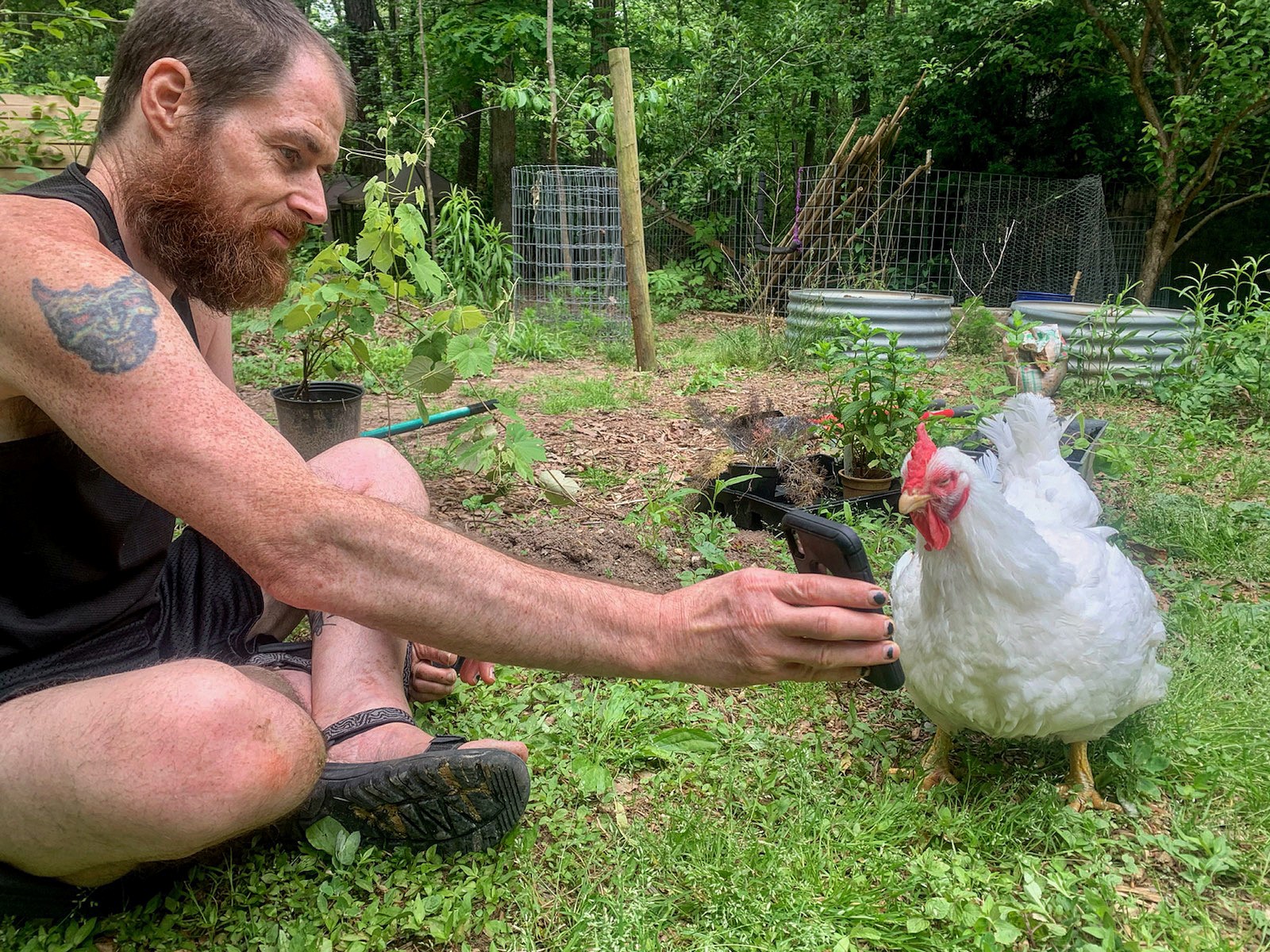
When it comes to the ethics of care, I do really firmly believe that it’s at the heart of what sanctuaries are, and what their goals should be, which is to provide individualized care to every animal that they take in. But also, it really feeds into what my understanding of veganism is, and I think, like, what the ethics of veganism are ultimately aiming to do, which is to help end the suffering of individual animals, on a systemic level through individual choices that we can make.
LT: Yeah! So, ethical veganism is the first core principle of the MRC. How were those microsanctuary core principles decided, and have they remained the same since the project's inception? Have they changed over time? What has that looked like?
AVK: The core principles were something that my partner and I came up with as we were trying to think about what microsanctuary meant in the context of vegan rescue and caregiving work, but also trying to think about what would inform a sanctuary that operated in line with the goals of ethical veganism, you know? So that's why there are ideas about, like, using products from your residents and not supporting so-called “humane” animal husbandry and things like that. So, being consistent. If you’re starting a sanctuary as vegans to rescue the survivors of animal agriculture, we don't want to then turn around and support animal agriculture in any way. That's where a lot of those principles come from, it's like saying, “well, okay, we're ethical vegans, and as ethical vegans, the only way that we can operate consistently as a sanctuary, is to do X, Y, and Z,” which are the following core principles.
The first big chunk of it all came very early on. We did add a couple. So, we added on the one about not paying for animals in rescue. That’s because it's not something that you initially think about, but as we were doing this work, we started seeing that there were cases where sanctuaries would purchase animals from farmers. And not just like, “oh my god, I saw this, you know, cow on the side of the road, and the only way that I can get her out right now is to pay the farmer.” I'm not talking about, like, “we're organizing a campaign to raise money and go around purchasing animals from farmers.” That very quickly was, like, I don't know about that, that's raising some complicated feelings. And then we encountered, an article that Farm Sanctuary had actually written on this topic from around that same time, which was just making the case that you shouldn't set out to pay farmers for taking in farmed animals. And there's a whole long list of reasons why that raises a lot of problems. And, you know, very situation is unique and stuff like that, but we wanted to kind of put it into one of our principles as an organization that we did not support making it a strategy to go around buying farmed animals.
Then, the last one that we added was the principle supporting seeing veganism and seeing our sanctuary work as a part of a larger movement for social justice and equality for all beings, and to operate in a way that you want to see, you know, non-human animals be free from harm, and free from exploitation, and free from discrimination. You need to also recognize that human animals, too, deserve to be treated equally, with fairness, with respect, and with an idea of supporting individuals for who they are, and allowing them to be who they are. So, really kind of trying to put into our core principles that liberation for all beings is consistent with the work that we do, and part of the ultimate goal of animal liberation is liberation for all.
I think for us, too. My partner and I are both queer, the board of directors has always been queer folks, and so we very much want to support increasing access and diversity in the sanctuary movement. For a long time, historically, sanctuaries were kind of looked a certain way, and it was only available to certain people, for a variety of reasons. We very much believe everyone should have the ability to engage in sanctuary and caregiving work if they feel so called to do so. That's where I think the microsanctuary model really shines, is that accessibility function, and we can talk more about that later, but we very much recognize the value of increasing diversity within the sanctuary movement, and as queer neurodivergent folks who are very committed ethical vegans, we wanted to make that clear in our core principles as well.
LT: Yeah, thank you. So, I'm sure there are lots of really great things about being involved in microsanctuaries and the sanctuary movement more generally, but what, in your opinion, do you think are the biggest struggles that are facing microsanctuaries?
AVK: Yeah, so, I think funding is obviously, like, always going to be a big one. Just in general, there is far less funding available for farmed animal rescue and sanctuary work than there is for dogs and cats and companion animals. Just as a baseline, the funding picture for farmed animal rescue is totally different than it is for companion animals. On top of that, it can be hard for folks who are really good at animal care, and really good at education and stuff like that to also be really good at fundraising. Like, I'm terrible at fundraising, I don't like it, and I'm not great at it. So, the funding side of things is difficult, just for a number of reasons, and I think that's a big struggle for micro-sanctuaries and sanctuaries in general, because caring for animals is expensive, and you never know when you take in another animal what their care needs are going to be for the entirety of their lives. I think a lot of the struggles that sanctuaries go through is balancing the demands of care work with the responsibilities to pay for it all. And unfortunately, that can be really, really difficult. In addition to stress and anxiety that that brings for the human caregivers, you know, it also can have impacts in the quality of care that sanctuaries are able to provide if they start to run into financial challenges and stuff like that. So that's a big one, for sure, is having enough finances to meet the demands of the residents you've taken in.
I think another one also is that the demand for animals needing homes is far greater than there are vegan sanctuaries and micro-sanctuaries to provide homes for them. And so, what that ultimately leads to is a real challenge where you have to learn how to say no to surrender requests. Unfortunately, there's no real good way to do that. It's really just kind of a matter of, for every individual person coming to understand where their limits are, and then respecting those. And the way that we really started to see it was informed by some things other folks have said, like Chicken Run Rescue—which very, very clearly stands out in my mind—the notion that every time you take in a new animal, you're decreasing the amount of time and resources and stuff that you have for your existing residents. And you can do that to a point, but at some point, you're going to reach a situation where you've taken away so much from the residents that you currently have. When you take in a new person, you can create a negative situation rather than one where you're able to provide enough for everyone there. And so, being able to recognize the obligation you have to your current residents while fielding all of these incoming requests to take in new residents and being called to help animals who are in dire situations and stuff like that. It's a real struggle, the recognition that you need to say no at some point.
One of the reasons why we like to talk about micro-sanctuaries as small but also part of a larger community, is that we recognize that every microsanctuary can only do so much, but if we increase the number of individuals who are able to start microsanctuaries, you're opening, you know, more opportunities for animals to find homes. You know, we don't want to feel like we have to burden a select number of people to take in all of the animals who need help, but if we can kind of maybe give people an opportunity to do it at a scale that's sustainable to them. The more people who are able to do that, the more opportunity there is for high-quality, lifelong homes for animals in need.
I think those, the financing and learning to say no are two big things that sanctuaries and micro-sanctuaries struggle with. The other one is just going to be having enough support, especially when it comes to emotional support and the kind of toll that that caregiving takes on us human caregivers over time. Understanding grief and having support and counseling and therapy and stuff for grief, it can be really difficult and I've seen, this year especially, a number of sanctuaries decide to close down because they've reached a point where they just can't take anyone else in, and they're trying to keep up with the financing needs and stuff like that, and also just the emotional toll that caregiving and losing members of your family takes and mourning them. So, I think, we don't really yet have a good support system just on the emotional support system for caregivers and sanctuary operators, and so I know that especially because we're all vegans and we all care so much about animals, it definitely can be hard, when these beloved animals that we've lived with for a long time and cared for pass away. I think that that can be something that can be a struggle and that can take a toll on folks over time.
LT: Absolutely. You had mentioned, just maybe one step before, about how the number of animals in need of homes greatly outweighs the number of homes that are available for them to go to. You've been doing this work for a while now, so do you think there are more sanctuaries and microsanctuaries now than there used to be, or have they decreased? What do those kind of numbers look like?
AVK: Yeah, so I have not quantified it, but I can tell you just from my observation, and also just looking at our grant program, the number has gone up exponentially. Like, it's a huge increase in the number of sanctuaries that have started since we got going in 2014. Not all of them last for a long time, but that doesn't mean that the sanctuary started and rescued a bunch of animals, and then they closed down and the animals were all sent to slaughter or something like that. You know, it can just be a matter of the sanctuary started, did a bunch of rescue work, and now has their residents that they care for, and they're not doing any more rescue. And they may go offline, like, as an organized sanctuary that's doing outreach and all that sort of stuff that they may just become a private kind of home for these animals. Or, you know, they may also need to rehome or something like that.
A lot of new sanctuaries have started. Some of them have closed down in that time frame, but I think a lot of them are still in operation, and so I think the number of sanctuaries has gone up quite a lot. Again, I haven't kept track of it in terms of accounting or anything like that, but I definitely have noticed a number, a huge increase just from experience of it and from running MRC. When we started our grant program, I had to go recruit people to apply to our grant program once we had the funding, you know, we were looking for folks to do it, and we were encouraging people to start a microsanctuary, and if you do, we can provide you a grant to help get started.
And now, I have too many people applying. I can't approve everyone. Looking at it in terms of grants, we have new grantees applying every month. I'm still also giving renewal grants to people that have been grantees for a decade. So, there's definitely always sanctuaries starting. And what they look like, it's always variable. A lot of them look kind of like more scaled-down versions of a farm sanctuary. But many of them also are just very small, like somebody rescuing a couple of animals and doing it as a vegan. And also, seeing it happen on the international scale, not just in the United States and Canada and North America. We've seen folks start up micro-sanctuaries in Southeast Asia, and in Eastern Europe and things like that. We see it happening in lots of places, and it's amazing to see a microsanctuary operating over in another country.
I think the sanctuary movement has definitely grown quite a lot, and especially just in terms of the diversity of folks who are running sanctuaries nowadays, there's a lot more diversity, which I think is awesome.
LT: Are you able to give the grants to sanctuaries outside of the United States as well?
AVK: Yes, like I said our first grant was to a rescuer in Norway.
LT: Oh, yeah.
AVK: But I wanted to make it international from the beginning, and the majority of our grants are based in the United States.
I would say we do—at least every year, at least a third of them are international.
LT: Oh, wow. So, on that topic, before I started the recording for the oral history interview, we were chatting just a little bit and you had mentioned that in MRC's history, you have given around $800,000 in grants, which is wonderful! I'm sure in that time there are lots of different sanctuaries that you have given the grants to, but are there any particular projects or grantees of the Microsanctuary Resource Center that you're especially proud of, or that are particularly memorable?
AVK: There's a couple things that jump out, and it's not a particular grantee, but it's actually a focus of our grant program. I'm really proud of our work on supporting reproductive healthcare for farmed animals. I think it's something that was very much not on anyone's radar except for a small number of people back when we got started. And, our focus has always been on hens and reproductive healthcare for chickens. But, just across the board, all species who are in the farming system – a primary focal point for their exploitation is their reproductive systems. Whether that's chickens and eggs, whether that's cows and giving birth to calves and lactating and their milk being taken from them, pigs and sows in gestation crates and things like that. Like, so much of the animal agriculture system depends upon exploiting the reproductive systems of farmed animals. Because we were learning about the ways that you can prolong the lives of egg-laying hens by helping to relieve them from the obligation to lay eggs every single day or thereabouts. Early on when we started our program, that became a major focus of what we wanted to do with our grants, was to support reproductive healthcare for chickens.
In the time that we've been doing this work, I've seen the adoption of, reproductive healthcare for chickens grow to where it's almost… I mean, I can't say this across the board, but I would say for the majority of folks, it's understood to be a standard of care, whether that's strictly on emergency cases or in cases of preventative care, you know. Chickens will likely need some form of reproductive healthcare.
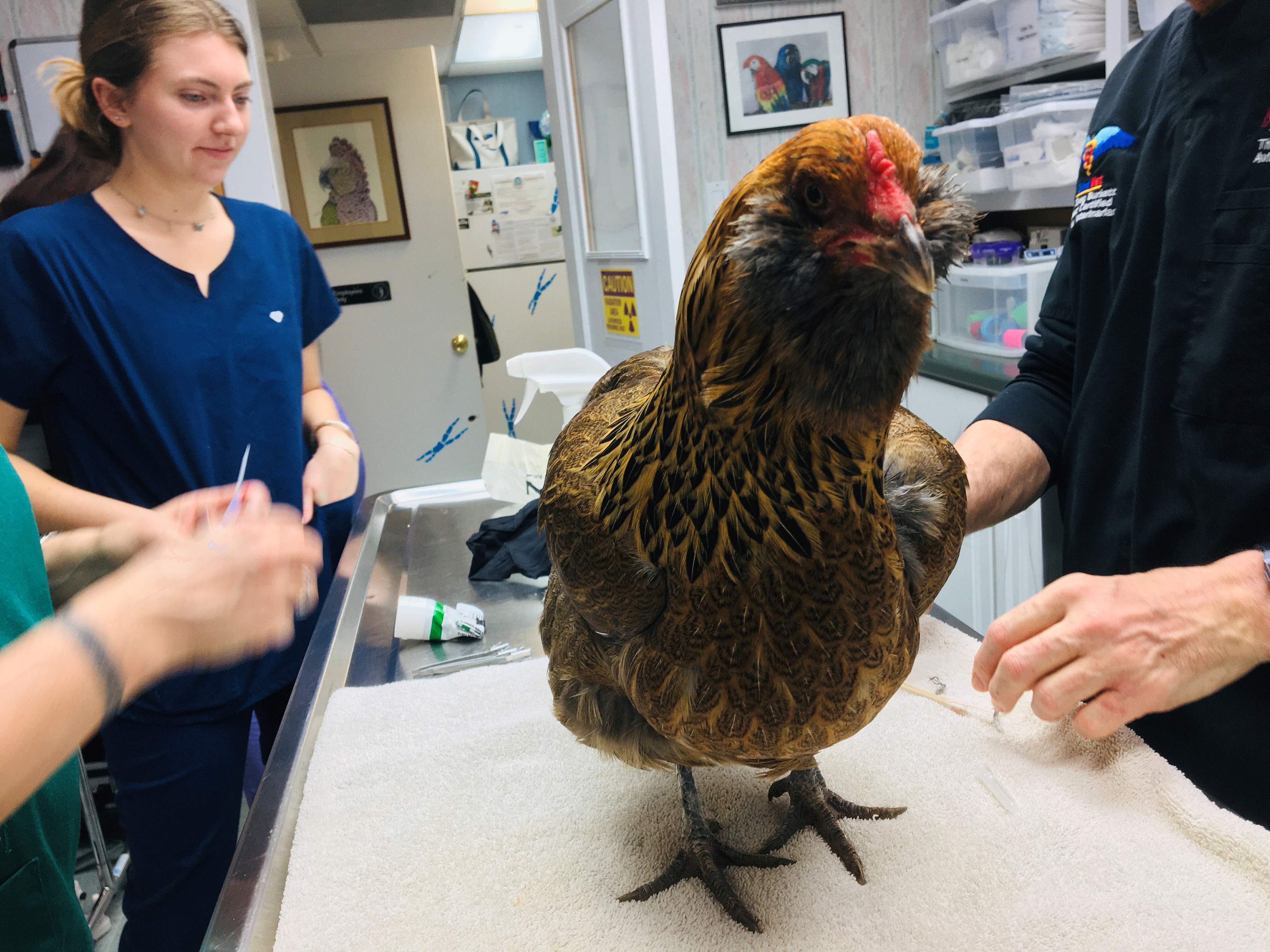
But ultimately, the idea is that the primary… or the number one cause of mortality for egg-laying chickens is egg-laying. Their entire biology has been exploited for the purposes of laying as many eggs as possible. And so, that comes with a whole lot of health problems, because in nature, their bodies weren't meant to do that. There's no evolutionary advantage to laying 300 eggs a year, and their wild ancestors don't do that. To get back to the question, I'm really proud of the impact that we've had on making reproductive healthcare for chickens, but also just across the board, more accessible and more understood by people who are starting up sanctuaries and doing caregiving. That was something that we immediately recognized was incredibly important. And I think we have a large community of caregivers who are very vocal advocates for reproductive healthcare for chickens now, and I really love that.
Also, in 2018, we started up the Microsanctuaries of Color Fund as a specific subset of our of our grant program to help encourage and support vegans of color to get involved in sanctuary work. We've given out—I don't know the specific amount off the top of my head—but, just from my recollections of the grant program over the years, I'd say we've probably given out around $10,000 or so in grants for that specific fund over the years. I've definitely been encouraged to see the increases in diversity for folks who are doing sanctuary work, and stuff like that. I think that that only benefits our work as a community, to have a diversity of voices and a diversity of settings, and a diversity of opportunities to do outreach and education. I'm really happy with our ability to have that program going over the years.
Besides that, there are a number of grantees and stuff like that who I think just have been doing phenomenal work, and also, personally, I always really love our ability to provide support for folks who choose to stay small and really embrace the idea of the microsanctuary idea. Just to name drop a few folks whose work I really love, and I think that they do a great job representing what it means to be a microsanctuary; one is a Zen Hen Sanctuary in Oregon, they're a chicken-focused microsanctuary, they do a great job of telling their residents' stories and things like that. In, Canada, there's—they're also kind of chicken focused, sorry, I know I’m revealing my bias here—but a place called Secondhand Stories. They are an amazing small sanctuary that I think really embody the microsanctuary core principles and the ethos of staying small. They're great, and also in Canada, the Browns’ Microsanctuary, they do a great job of storytelling and really representing the individuality of their residents, and they're a very small microsanctuary. And then, in the United Kingdom, Karen's Kind is an awesome microsanctuary. It's a couple, and they're doing a lot of chickens, but also they've had, I think, pigs and lambs. They're another one who I just love the way that they tell the stories of their residents and also talk about their approach to staying small and staying a microsanctuary and representing what it means to be a microsanctuary as a sustainable model of sanctuary for people who just decide to do it. I mean, you know, our entire grantee community is amazing, but those are some folks who just come to mind immediately and I think do a really great job of representing the whole ethos behind microsanctuaries.
LT: Yeah, certainly lots to be proud of! Alright, so as we were discussing a little bit earlier, everybody in the Microsanctuary network, or who is affiliated or a grantee of the Microsanctuary Resource Center, has made the choice to be ethically vegan. This is something that I think a lot about in my work. I know it's something that Dr. Kalmanson, who's running the Jain Studies programming at UNT, is also thinking about a lot, which is certain dilemmas that you can face in caring for animals, particularly in sanctuary. So, to bring this back to the Jain Studies focus of this oral history series; there's a Jain story about a king who is visited by a pigeon. The pigeon is being pursued by a hawk and is seeking sanctuary, so that they are not killed by the hawk. The pigeon asks the king for help. And then the hawk comes along and also asks the king for help and says that it's unfair to offer help to the pigeon but not to offer help to the hawk, who is hungry and starving and can only eat the pigeon because hawks are obligate carnivores. There's a lot of difficulty here. There are a lot of gray areas. I think this really gets to the heart of some of the dilemmas that are faced in day-to-day, hands-on caring work with animals in sanctuaries. So, I wonder if this story or any of these kinds of dilemmas factor into your approach both to veganism and to sanctuary life?
AVK: Boy, yeah, we could spend a day on this question alone, as I'm sure you understand. So where to begin? I don't know that my thoughts are going to flow in a specifically organized way, but I have a number of them that I'll try to string together, and hopefully it's sensible. So, the first one is that, I think, as vegans, we understand that we don't live in a vegan world. Nature isn't vegan, and the world that humans has built is very much not vegan, and so you can get so caught up in perfectionism that you just kind of send yourself into a nervous breakdown. Fundamentally, you have to recognize that you're never going to be as perfect a vegan as you would ideally like to be. And so, you have to then make ethical choices, both on a general scale but also on a case-by-case scale of choices that most align with how you understand what it means to be vegan. There's so much diversity of thought within the vegan community about what that means. Like, some people want to kill all the predators in the wild, and other people don't, so there's a lot of diversity discussion about what veganism means, and how to exist in the world like that.
There are no 100% right answers most of the time, and you have to make the best choices you can, given your circumstances and your ethics. So, when it comes to making choices and doing rescue work, we very much try to recognize our obligations to individuals whom we rescue. That may mean for the well-being of an individual we've rescued, we may have to use products that aren't vegan. Like, we rescued a baby goat early on in our rescue work who was very, very young, was blind, was rejected by his mother, and so could potentially have faced a number of serious long-term health problems because he wasn't getting access to his mother's milk. So, we made the choice to reach out to a local goat farm and get milk from them, because it would have the colostrum in it that he needed as a very young baby. I don't support farmers. I went there and I got the milk, I saw the situation at the farm. It wasn't a decision I would make in any other case than, “this was the absolute best thing to do for this individual.”
In every case, you're very likely going to be in a situation where the animal that is in front of you right then and needs your help may require you to make choices that in an ideal situation, you wouldn't have to make. And if you're not comfortable doing that, then maybe rescue work isn't for you. I don’t know that our choice with the goat was something that everyone would agree with. But we also recognize that we were committed to this individual and this is what he needed for his best overall health and his health outcomes, and so we just have to try to do the best we can in the circumstances that we have available to us.
One of the things that we think about is the impact of domesticated animals and our sanctuary for domesticated animals on the native wildlife that we live with. You know, the hawks who fly overhead and want to eat our chickens, and the raccoons who live in the woods and want to get into our chicken enclosures at night and feed themselves and feed their babies. They live here. They have every right to be here as much as, if not more than we do and our chickens, who are descendants of jungle fowl from Southeast Asia. You know, the only reason that they're in central North Carolina is because humans have brought them here. From a framing perspective, that means that we don't view raccoons and hawks as these vermin and enemies of our beloved chickens who are just dangerous and need to be exterminated because our chickens are all that matter. Like, we see them as cohabitants of this space, and we try to look at our sanctuary as a sanctuary for all beings, including the wildlife who live here. We don't let them eat our chickens, but we do let them eat the fruit that grows on our trees and other things. So, we try to find ways to safely cohabitate with the wildlife around us without putting the individuals who we have committed to keep safe from being in harm's way. I think that getting into rescue work, you're going to be put in a situation where you have to make a decision that may not 100% align with your ideal ethical framework, but is also, in this situation, the best decision for the individual who needs your help and is under your care. And I think that the ethics of care in these situations means that the interests of the individual who you're responsible for also need to be taken into consideration. That's why veganism as an ethical framework is fascinating when it becomes a praxis. Not just in terms of how I, as a vegan, am shopping at the grocery store and things like that, but also as how I, as a vegan, am becoming a caregiver for a vulnerable individual who is ultimately a victim of the system that I am complicit in. I don’t think that veganism is a separate matrix of decision points in that caregiving role, but I also think that it's way more dynamic than just, “we don't consume animals because we don't want animals to suffer.” You know, in the realities of caregiving day-to-day, there's a much more multifaceted decision tree that goes on in those situations, as I'm sure you've seen hands-on from your work, like working at a sanctuary there.
I don't think any vegan who runs a sanctuary puts their veganism in the house and then goes out to the sanctuary. I think we make every decision, with the kind of awareness of our ethics as vegans. But what that looks like in a case-by-case basis when you're doing hands-on caregiving work is going to be very, very, very, very diverse. Some people may not be comfortable with that. A lot of people who are doing vegan advocacy criticize sanctuaries in a number of ways. But to me, I really feel like the caregiving and rescue component of being a vegan is very much valid, and it's very valuable. And I don't think that that we can just ignore the fact that there are trillions of individual animals, living right now, in the farming system, and we may have opportunities to help them if we can. You know, to me, that's part of being vegan. It's not separate from it.
LT: Thank you for sharing that.
Alright, well that was the end of my prepared questions for this oral history interview! Is there anything else that you would like to share about your work, your sanctuary, or the Microsanctuary Resource Center before we close out?
AVK: No, I don't think so. I think we really touched on a lot of stuff, and like I said, so many of these questions, I feel like we could have a lot a long conversation about them, and it's fascinating to think about it in that in that way. But yeah, no, I really love the initiative there, and I've been really tickled to see some of the interviews that have been done already. So, I feel really honored to be part of it, and I'm happy to help support it.
LT: Well, thank you so much!