 University of North Texas

This interview was conducted by UNT graduate students Amber Brasher and Heather Razak for the Bhagwan Adinath Animal Humanities Initiative in partnership with the UNT Oral History Program. It has been edited for length and clarity. All photos courtesy of Beth Bargar.
Amber Brasher: Hello and welcome. Today is March 12, 2026. I'm Amber Brasher.
Heather Razak: And I'm Heather Razak.
AB: And we're with the Jain Studies Animal Humanities Initiative at UNT. Today we're interviewing Beth Barger regarding her volunteer work for the DFW Wildlife hotline for the animal humanities oral history collection. Welcome, again, and thank you for joining us today. We'll get started with our questions. Could you start off by telling us a little bit about yourself, like how long you've been in the DFW area, and what your background is, and anything else you'd like us to know?
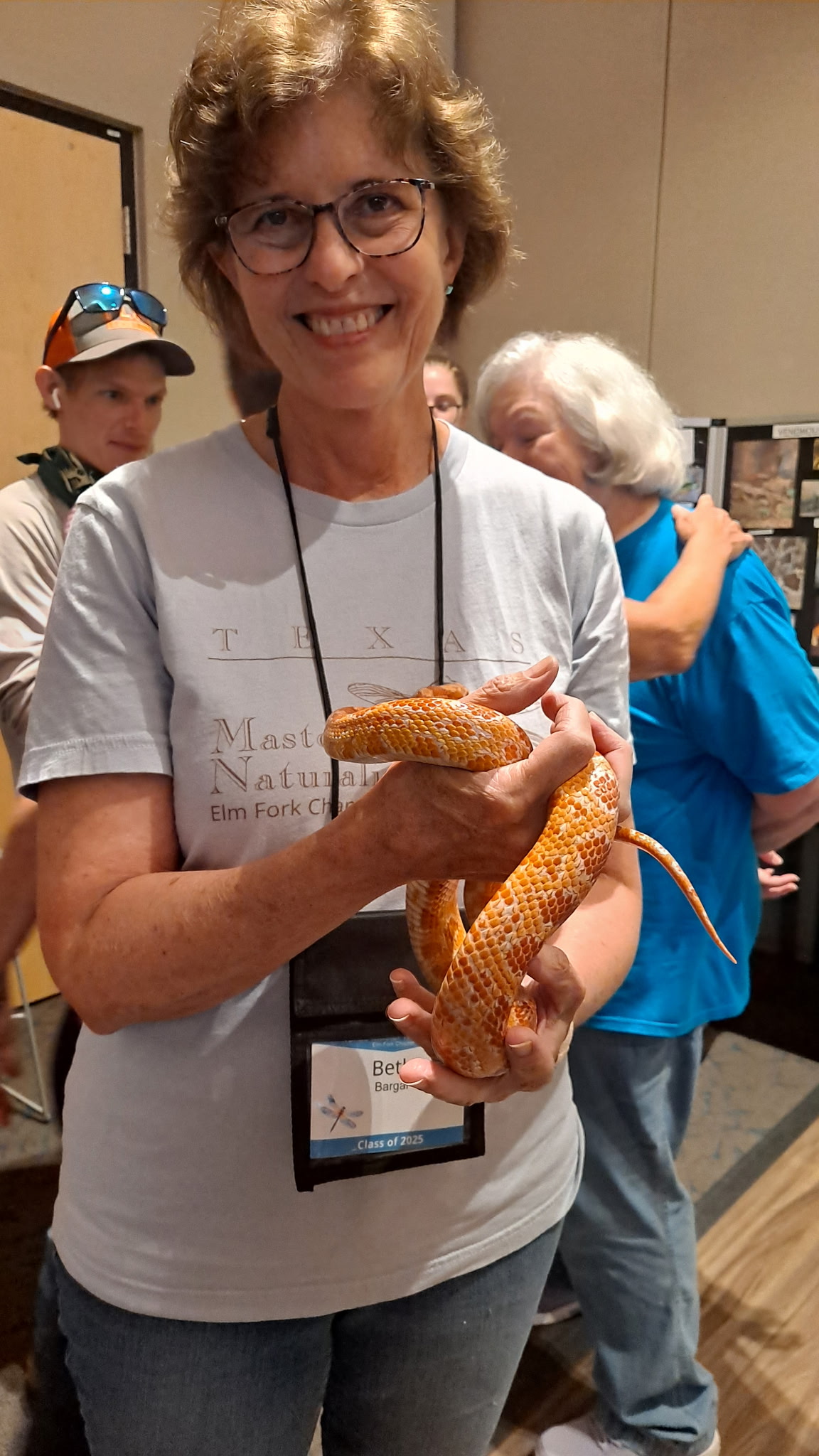 Beth Bargar: Well, thanks for inviting me do this! It was interesting to look through the questions
and think about wildlife considerations that mean a lot to me. So, thank you for that.
Beth Bargar: Well, thanks for inviting me do this! It was interesting to look through the questions
and think about wildlife considerations that mean a lot to me. So, thank you for that.
I moved to Dallas in the 1980s after I completed graduate school. I had a job in Dallas, and thought I'd be here a year or two, and here I am still!
I grew up in Cleveland, Ohio, and received an undergraduate degree in geology. I think that one thing that appealed to me about geology originated from my childhood in Cleveland—there are fossils in the shale bedrock along the creeks. My mom liked to take us to the neighborhood parks to walk the creeks, and she also helped us learn to identify birds. When I look back at some of the interests that have carried through my life, they are related to my childhood.
AB: Yeah, that's really interesting. I love fossil collecting in the DFW area as well. Do you get to do much of that here?
BB: Yes, it's another great place, especially for oysters and ammonites.
AB: Was you your master's degree in geology, as well?
BB: Yes. I used my geology background working for an environmental consulting firm for most of my career, and I just recently retired.
AB: That's wonderful. Is the DFW Wildlife Coalition Hotline your first experience volunteering with wildlife rescue?
BB: Yes, I started with the hotline about four years ago. There was a seminar that happened to come across my Facebook feed about wildlife rehabilitation, and it was sponsored by a group called the Texas Metro Wildlife Rehabilitators. The wildlife rehabilitation seminar included several speakers. I initially thought that I'd like to do something with bats, because there were little brown bats where I grew up. One of the speakers reminded us of the rabies shots that we'd need to be responsible for obtaining. It also seemed a little overwhelming as each of the rehabbers explained about taking care of various types of wildlife in their own homes.
But there was also a speaker from the DFW Wildlife Hotline, and I thought—now there's a good way to start, because we learn how to give the public advice when they call in with wildlife concerns, or they find injured or orphaned wildlife, and I could take calls from the comfort of my own computer. I could help wildlife and not necessarily have baby squirrels in my bathroom! So that's how I started out.
HR: Has the way you do that work changed much over the years?
BB: It has. I've built my network, which, to me, has been important, because there are very few wildlife centers in the North Texas area, and there are a lot of permitted rehabbers who take care of animals in their own homes. It’s been a rewarding process to get to know the various rehabbers. I felt like it was worth the effort, because then I could interact with them more effectively when I get a call about a specific animal.
Through that process, I've ended up doing transport, because one of the big issues is that people will find an injured or orphaned animal, but then, due to whatever their circumstances are, they just can't drive the animal to wherever it needs to go—sometimes it's quite a distance, or they're scared of the animal. We run into that a lot. I think it's we're taught—probably, for the animals’ own good—to be very wary of touching them. Sometimes it's hard to talk people into containing animals, even with gloves and detailed instructions. So, I have helped out quite a bit with transport.
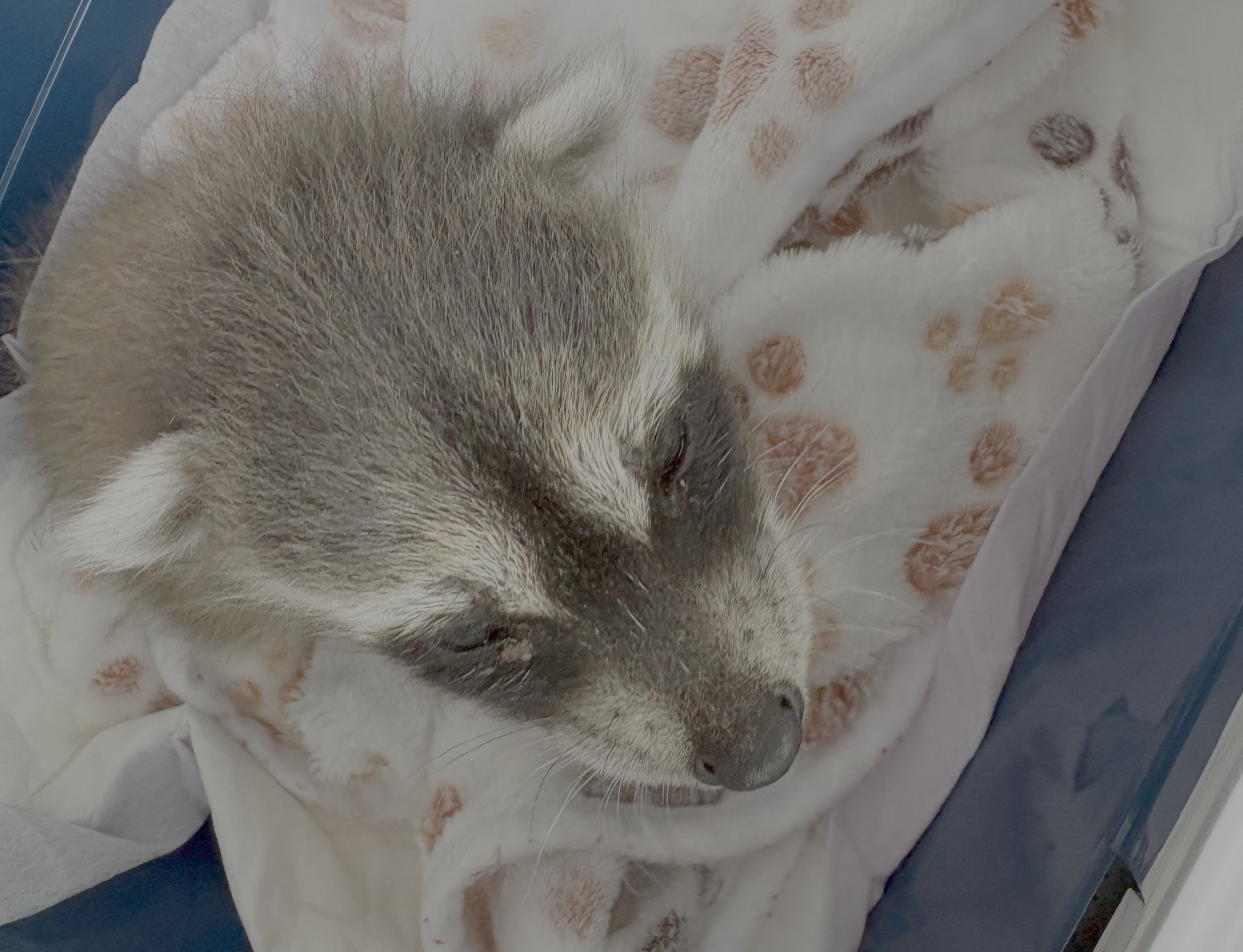
And then the other thing I've gotten involved with is the “mange team”. Coyotes, bobcats, and foxes that eat rats killed by rodenticide end up having an impaired immune system, and that manifests itself in those animals often as mange. Mites are a normal part of the environment, but with impaired immune system issues, animals just can't fight them off. And so they scratch and scratch, and they'll have sores and patchy fur. They can be treated for mange in the field, but it's tricky to connect the coyote with the bait that has the medicine in it. I've been working with the mange team now for a few years, and have found it to be really gratifying, because you can see a coyote go from looking so pathetic to having eventually having their fur grow back and looking and behaving so much more normally.
HR: What would you say is the most interesting animal you transported?
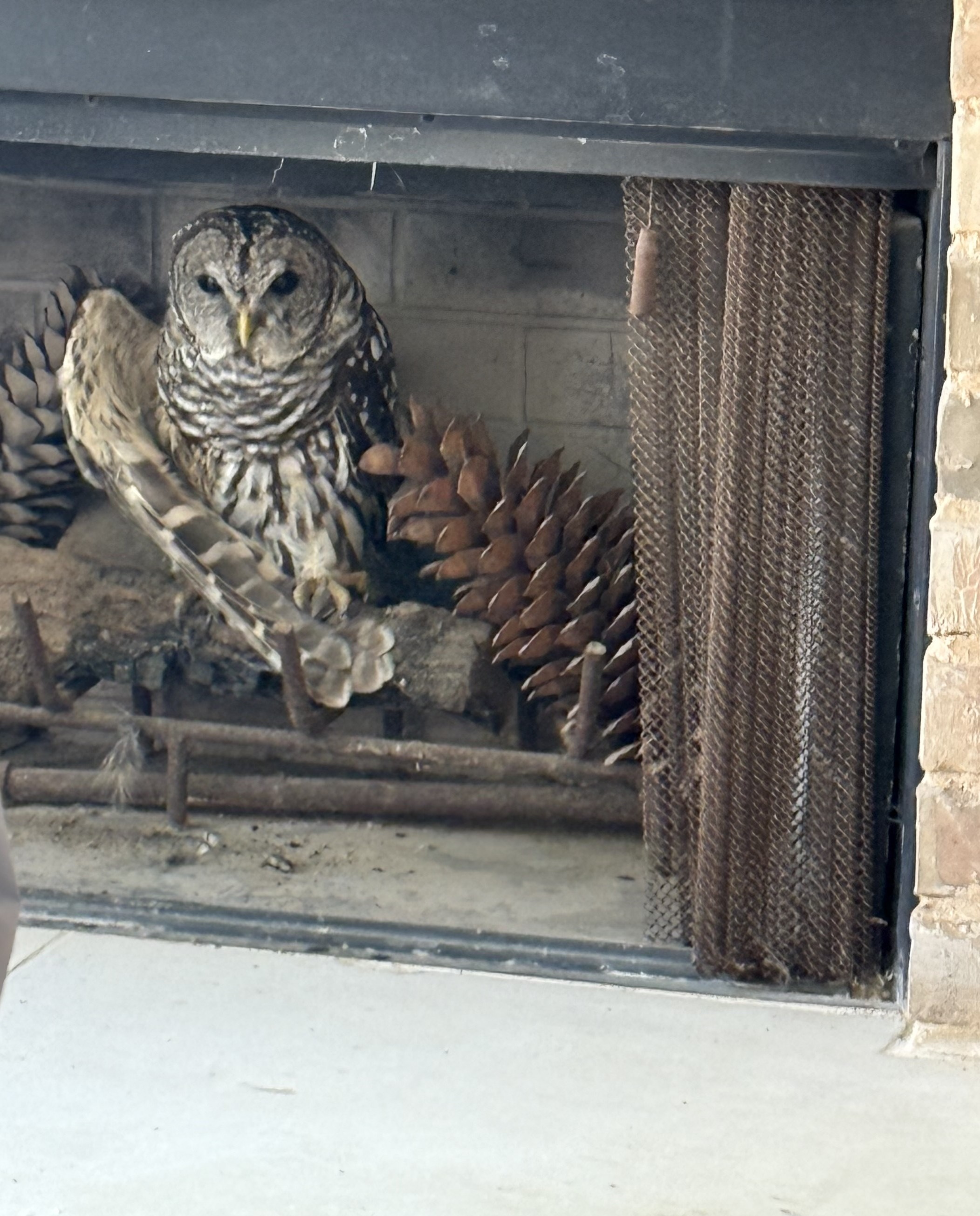 BB: I recently had the chance to contain a barred owl. You have to be very wary of their
beaks and their talons, especially their talons. This guy had an injury and had found
a safe haven in an outdoor fireplace. I was able to coordinate with the homeowner
and she helped me with towels and with making sure he didn't go towards the pool.
I was really pleased that we could get him, and I could transport him to a nearby
veterinarian who is permitted to rehab raptors. It was a gratifying experience, but
it got my heart pumping a bit!
BB: I recently had the chance to contain a barred owl. You have to be very wary of their
beaks and their talons, especially their talons. This guy had an injury and had found
a safe haven in an outdoor fireplace. I was able to coordinate with the homeowner
and she helped me with towels and with making sure he didn't go towards the pool.
I was really pleased that we could get him, and I could transport him to a nearby
veterinarian who is permitted to rehab raptors. It was a gratifying experience, but
it got my heart pumping a bit!
HR: Wow, I'm sure! Is there a rescue or an animal you've worked with that has really stayed with you? And what is it about that one that stuck with you?
BB: Well, I would say that coyotes have stuck with me. Part of it is that before I knew about the hotline—and this maybe even date back to before social media - there was a coyote with mange in our neighborhood. I was feeding some feral cats from my front porch at that time, which was not the best idea, but that’s a whole different topic. He [the coyote] would come up to our front door sometimes to see if there was cat food. I really got a close look at how the mange was so detrimental to him, and I didn't know what to do or who to contact to help him. I’m just so glad that now I know exactly what to do. I might not be successful at my rescue efforts all the time, but if I don't know how to do something, I know who to call. And that's where networking really comes in.
AB: It must be gratifying to see how what you're doing is making an impact on the animal. Our next question kind of goes along with what you were saying about feeding feral cats having some pluses and some minuses. I remember a time when I was younger, and I was trying to rescue a little red-eared slider turtle that I thought was drowning. It kept coming back to my little pond, and swimming around in circles in there. And I would take it really far away and let it go, and then I would go back and find it an hour later in the same pond. So we imagine that you probably get a lot of situations where people mean well, but they're not sure whether stepping in is the right thing to do, or if they should maybe take a step back and let nature take its course. Could you talk a little bit about how you think through those kinds of situations, and how you would help people figure out when to intervene and when to leave the animal alone?
BB: That's really one of the big goals of the DFW Wildlife hotline—helping people through those decisions. One thing that we find—and I know it would be my first reaction, too—is that if you find injured or orphaned animals, you want to feed them, especially orphaned ones, when you think maybe the animal hasn't eaten in a while. It's just, I think, human impulse to want to feed them and give them water, and that is almost always detrimental. Either what the person feeds them, often based on advice from the internet—and there's just such bad information on the internet—or the way they feed them ends up causing them to aspirate. And then the rehabber is dealing not only with the orphaned animal being underfed and possibly injured, but also with other problems like aspiration or diarrhea from having been fed improperly. So we talk people through those circumstances but try not to make them feel guilty, because you want them to tell you exactly what they've done and not be too judgmental about it.
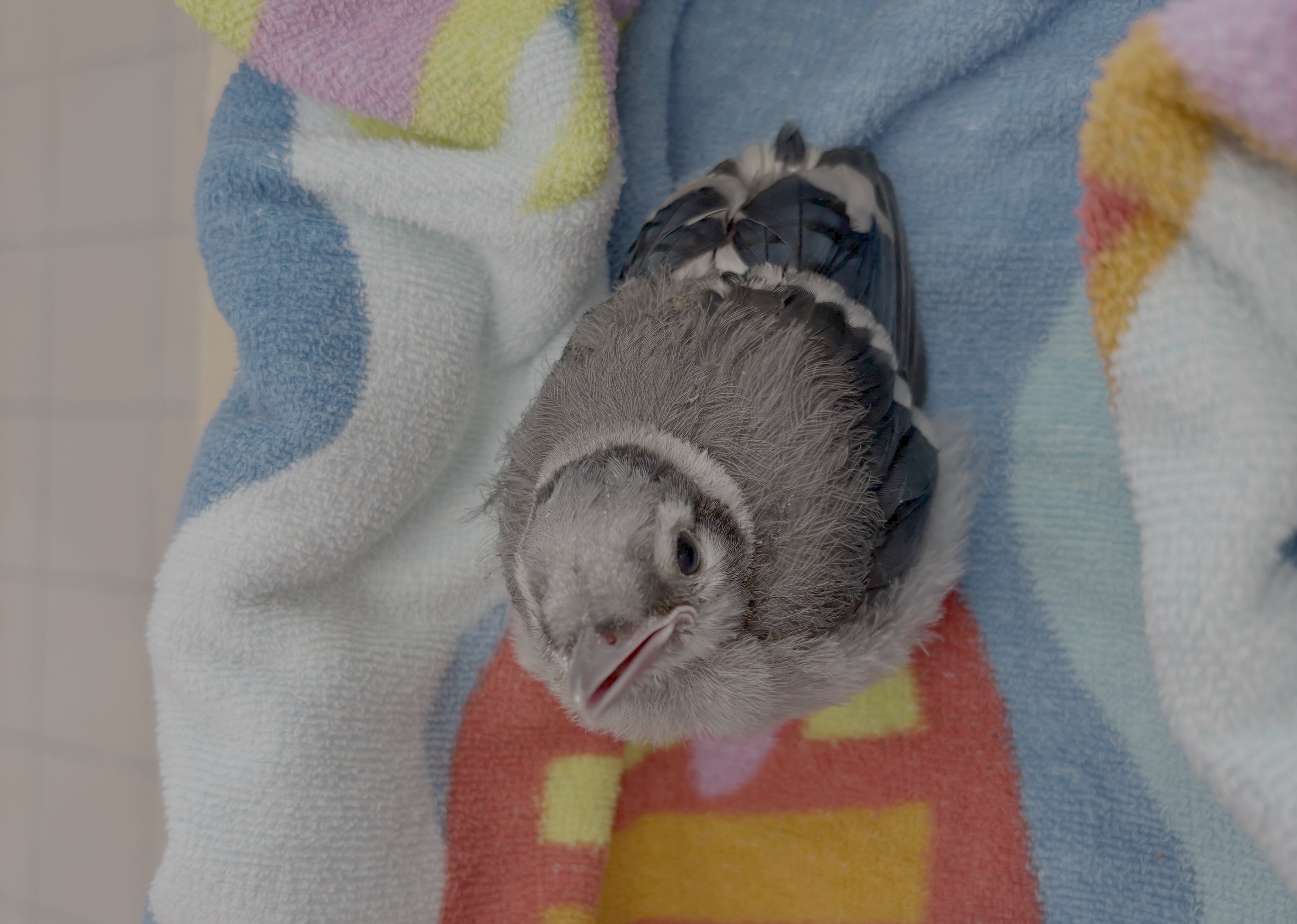
Another example that we'll be dealing with a lot in the upcoming weeks are baby birds and the decision about whether a baby bird is a fledgling, which is one that's learning to fly. And that whole process makes you wonder how there are any birds at all, because sometimes they can be on the ground for a week before they take flight. But trying to bring them to a rehabber could cause them more trauma than just leaving them alone if the parent is around. And the rehabbers have told us at that stage in their life, it’s harder to get them to eat. Birds are a big topic with trying to help people through those decisions.
Another one is turtles, like your example, red-eared sliders. They aren't as territorial as, say, box turtles. Box turtles have a very limited radius where they live, and if you take them even a mile away, they'll spend the rest of their life trying to figure out how to get back to their territory. So yes, we have plenty of conversations like that with callers on the hotline.
AB: I'm sure that probably leads to them having to cross busy roads, too.
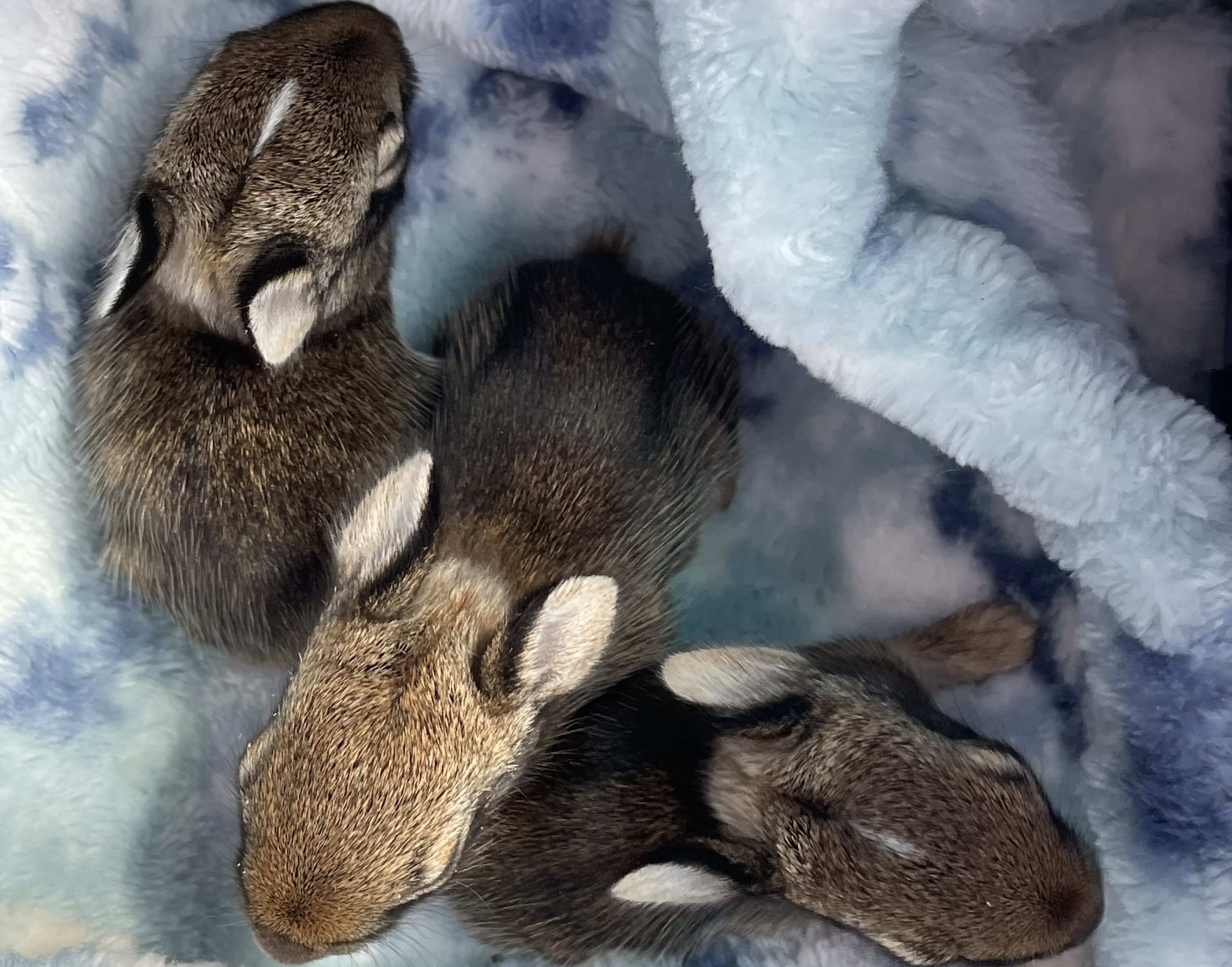
BB: Yes. One other example has to do with cottontail bunnies. The mantra is generally —leave the bunnies alone. We have recommendations if you have a dog about how to protect the nest because you can’t move a cottontail nest even a foot away. The mother rabbit has a little GPS for the location of the nest, and that location only, and she will not find them even what seems to us like a close distance away.
So, we talk about that with bunnies, and then with squirrels—sometimes a baby will end up out of the nest, maybe from a storm or the tree having been cut down. We ask the caller for photos and if the baby squirrel seems healthy, we go through steps with the caller to reunify with the mother. We send them a YouTube reference that has baby squirrel calls that they can play to try to help tune the mother in to where her baby is. Even if the nest has come down, mother squirrels have more than one nest.
I got to experience that myself, before I volunteered on the hotline with a storm that came through, and suddenly I had four baby squirrels crying in my front yard. I reached a hotline in San Antonio, and they talked me through the reunification process, and I was able to look from my living room window, kind of surreptitiously. I watched the mother squirrel gather them up, one at a time, in her mouth like a little ball, and take them to another tree.
HR: We wonder about bigger ethical questions that might come up in your work. In class, we keep coming back to the story of the Jain king with the pigeon and the hawk, because it gets at how complicated it can be when one animal's survival seems to come at the expense of another's.
BB: It definitely comes up, between my direct work and then what I see on Facebook. It’s very upsetting for people if they have a cottontail or bird nest, and they see a hawk, or a snake, or something like that. I don't know who the king sided with! I should have read up on the story before we talked, because it's not an easy situation.
But when it's native Texas wildlife, and not a feral cat, it's easier for me to feel like, you know, if the coyote gets the rabbit, or if the snake gets the bird eggs, then they're part of our ecosystem, and if they're left in balance, then it all seems to work the way nature intended it to. I'm not saying I'd want to witness it, but, as long as we're talking about native Texas wildlife, then I can sympathize and feel like it's part of the circle.
AB: So, this is one that I've been wondering about recently, because I've seen a number of birds that seem trapped in buildings or where they're not really supposed to be, like inside a Walmart. Or I recently saw a pigeon in the airport in New York, and I was just, like—What is this bird going to do? They said that he had been sitting there for probably two days or so already, and I was just wondering if anyone had given him water or food. What do we do in this situation? Do you have any experience with callers reporting that?
BB: Yes. Sometimes the situation involves a bird that has been in an enclosed building for a while, and so they're a little easier to contain, because they haven't had food and water, and if the caller can contain them, then we can point them in the direction of a permitted rehabber for birds. But if you've got a healthy bird in a building, it's hard to get them out. What we generally recommend is you try to isolate them to one room, turn out the lights, open a window or open an exterior door, and then—either with somebody to help or possibly by yourself—get a large sheet and try to direct them toward the open window. But you have to really stay calm, because the bird might fly near your head or do something unexpected, and they'll feed off of your emotions. Sometimes, if a bird is in a garage, I've seen the recommendation to block any light, open the garage door, and maybe even put some food or water outside of the garage door to try to attract them that way.
Some of the rehabbers have people on their team who can assist. You can't count on that, but there are rehabbers who have volunteers who will try to help, especially when it's a raptor, because then you have the added complication of the fear—the justifiable fear of the talons and the beak and the wings. If you can get a sheet over them and then gather them up, kind of like a football, then you can release them outside. If the animal had been in the building or garage for a while, it would be good to get them into a box and transport them to a permitted rehabber for care.
AB: That's wonderful to know. That's so helpful to know about turning off the lights. Do you have any stories that you could share about when a caller's attempt to help or rescue went awry or maybe made things worse? I know you said that you have to walk a really fine line, because you don't want to shame anyone.
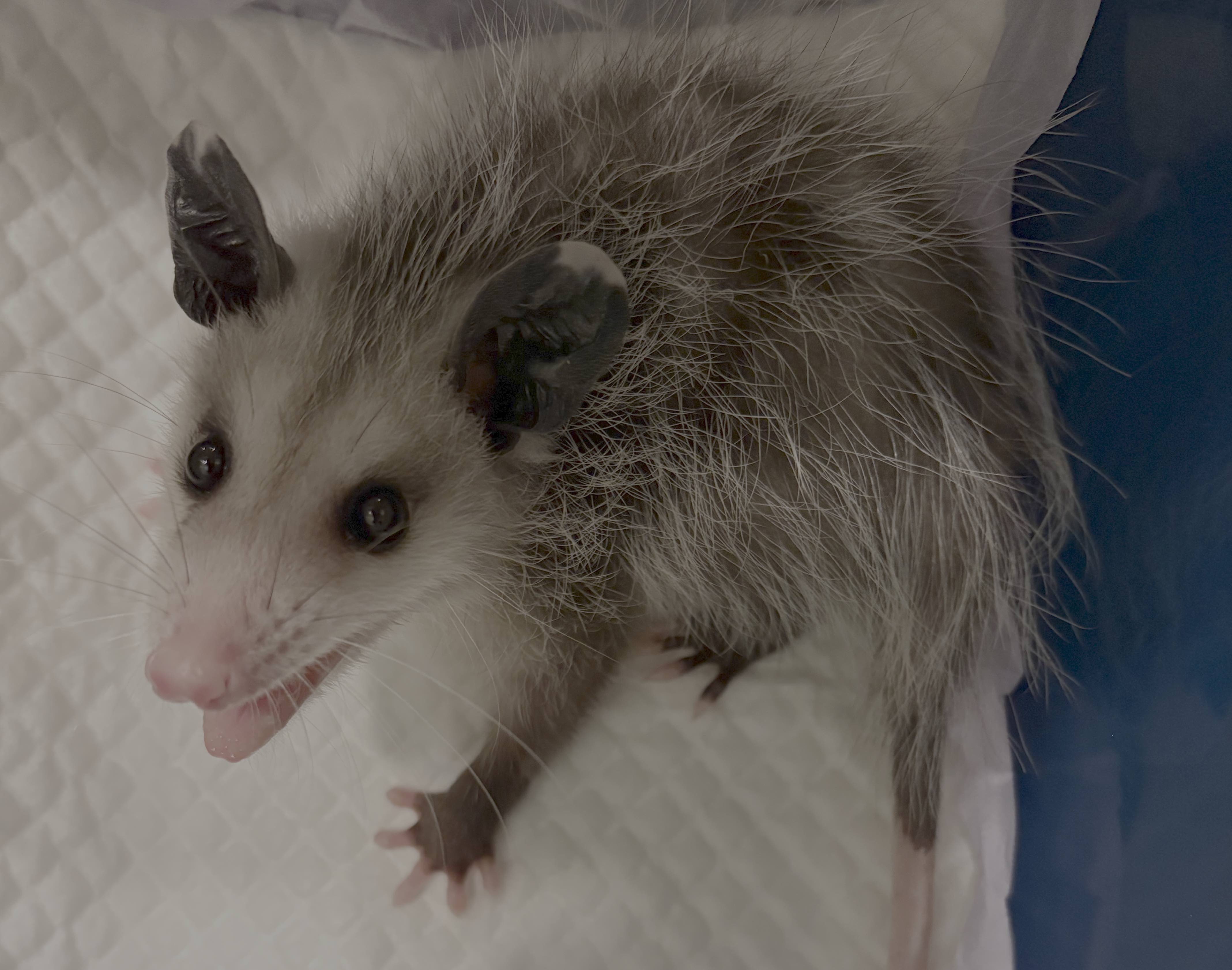
BB: Well, sometimes people trap animals that they consider to be a nuisance. I had a caller last Saturday that had trapped an opossum. She lived in a pre-manufactured house with an apron around the base of it, and there were holes in the apron. Understandably, that was a pretty good place for many types of wildlife. She's probably lucky that it was an opossum and not a skunk. I explained to her that it's not a good idea to relocate wildlife, because they may have babies which then become orphaned. Also, if you take them out of the area that they're familiar with, they don't know where the resources are, and they're also going into somebody else's territory, and so the mortality rate is very high for animals that get trapped and released somewhere else. I also cautioned her that unless she fixes the apron around her home, then some other animal is going to move right in.
We talk about that a lot with squirrels. Some people will have these beautiful yards full of trees, and they're mad at the squirrels because maybe they chew on their outdoor furniture or chew on their house, and so they want to trap them and relocate them. Well, they've got a beautiful environment for squirrels, so it really isn't going to do any good. You have to fix the environment, or you're not going to fix your problem.
HR: In your work with the hotline, or any past rescue positions that you've had, have you been asked to help by taking home the animals to rehabilitate or otherwise participate in the rehab efforts?
BB: Sometimes I have taken in an animal overnight, similar to asking a member of the public to keep an animal safe until a rehabber opens the next day. My shift ends at five o'clock on a Saturday, and especially with birds, the opportunity to get them to a rehabber on a Saturday night is limited. So sometimes on a very rare occasion, I've kept animals overnight if somebody drops one off to me or I find them, but our mantra of “no food, no water” kicks in. They spend the night in a quiet, warm, dark place to help keep them calm, and are taken to a rehabber as soon as possible the next morning. But I also did volunteer for a couple of years for a center doing hands-on care. I volunteered one evening a week, and that gave me the experience to see what their work involves and the challenges they face.
HR: When you release prey animals like rabbits, how do you think about where to release them? Are you trying to find the safest place possible for them, or are you thinking more about returning them to their place in a larger, natural system?
BB: That's a really good question, and one that we do encounter on the hotline, and rehabbers have to consider all the time. It’s best not to trap and relocate wildlife as I’ve already mentioned. If injured wildlife go through the rehabilitation process, the ideal outcome is to return them to the area where they were found. At the wildlife center that I volunteered for, they kept track of the location and would sometimes contact the person who found the animal and ask them if the recovered animal can be released back to their yard. That’s a good strategy, because any time that an animal can be released to their own familiar territory, the better, and the finder gets to experience the complete rehabilitation process. It isn't always possible. And maybe for a bunny, it isn't as important to do. In that case, I think the rehabbers look for open land that has food and water sources and places to hide—a good spot to give them a chance, a second chance.
AB: I really learned so much today from you! Is there anything else that we haven't covered or asked you about today that you would like to talk about?
BB: It's been really good to talk to both of you! There are some excellent Facebook pages for wildlife like one about identifying snakes. The moderators of that page are trying to encourage people not to kill snakes, so they identify them very quickly and give tips on how to send them along their way. There is also an informational and educational Facebook page about native Texas wildlife. I know social media has its set of concerns, but one thing it is helpful for is wildlife education and sharing information.
There's also a book by Amy Martin, and it's about places to experience nature in DFW. You know, obviously we're such a huge metroplex, but there are some pockets of incredible wild places. Another inspiration for me is being a Texas Master Naturalist with the Elm Fork Chapter based in Denton. We have over 50 projects with many ways to volunteer.
*Editor’s note: Readers can find these resources at the Facebook pages What kind of snake is this? North Texas Educational Group and North Texas Wildlife Talk and Facts; in Amy Martin's book Wild Nature: Explore the Amazing Nature around Dallas–Fort Worth; and at the Elm Fork Chapter of Texas Master Naturalists.