 University of North Texas

Below is the next conversation in our series featuring members of the Microsanctuary Resource Center (MRC). Recipients of MRC microgrants manage their sanctuaries according to strict ethical principles regarding the autonomy and agency of animal residents.
In the interview below, we meet Britt Menhart of Misfits Coven, a microsanctuary based in Prosperity, Pennsylvania. In our conversation with Britt, we explore how the work at a microsanctuary is part of a larger spiritual practice. Britt reflects on the philosophies of the pagan paths that inform her approach to animal rescue, and we discuss some of the fascinating similarities to Jainism.
Both Wiccan and Druid communities often describe themselves as nature-based or earth-focused religions that honor the sacred in the living environment, whether that refers to a multiplicity of forces and deities or to a unified or all-encompassing world spirit. Readers interested in learning more about the pagan traditions that inform Britt’s work at Misfits Coven can see a list of suggested websites below.
The interview was conducted by Leah Kalmanson for the Bhagwan Adinath Animal Humanities Initiative in collaboration with the UNT Oral History Program. It has been edited for length and clarity. All photos courtesy of Britt Menhart.
Leah Kalmanson: Today is June 24th, 2026, and I’m Leah Kalmanson with the UNT Jain Studies Animal Humanities Initiative, and I'm interviewing Britt Menhart of Misfits Coven for the oral history collection.
Britt, could you share something about your background, where you're based, where you're from, or anything else you'd like to let us know here at the start?
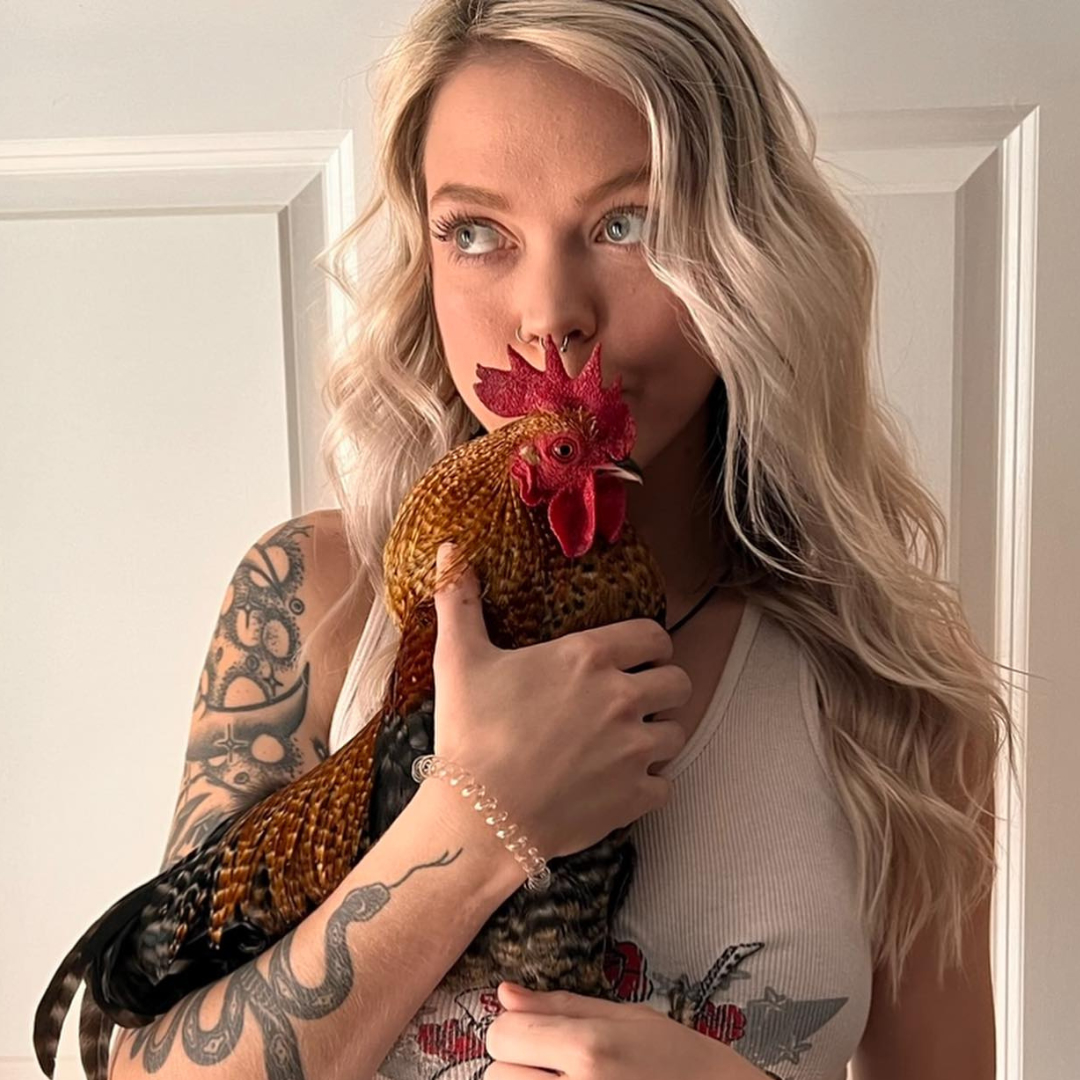 Britt Menhart: We live in Prosperity, Pennsylvania. So, we’re outside of the Pittsburgh city limits,
about an hour. We’re in a pretty rural community out here. And my background—I went
to school for biology. I was a vegetarian growing up and then went vegan in my early
20s. And I've had the sanctuary for about 6 years now.
Britt Menhart: We live in Prosperity, Pennsylvania. So, we’re outside of the Pittsburgh city limits,
about an hour. We’re in a pretty rural community out here. And my background—I went
to school for biology. I was a vegetarian growing up and then went vegan in my early
20s. And I've had the sanctuary for about 6 years now.
LK: Can you share a little about how you got into doing sanctuary work and ended up with Misfits Coven?
BM: I started out in grassroots animal rights activism. I used to be pretty hardcore in that and spent a lot of my time doing that in college and afterwards. And from doing that, I encountered a lot of animal rescues and surrenders and animal liberations. So, I started accumulating more animals. And I felt bad taking them to other sanctuaries, and just kind of dropping them off, and making all these other workers take care of them in sanctuaries that were doing their best. So I started my own microsanctuary.
LK: What was the first animal you ended up with that you decided to keep?
BM: It was a little rooster. His name was Bodhi. He was a little bantam, so he was only about, like, this big [gestures to show height].
*Editor’s note: Most bantams weigh under two pounds.
I was monitoring slaughter trucks going out of a facility nearby, just kind of seeing when they left and the conditions of the animals at the time. And he [Bodhi] must have either escaped out of somebody’s vehicle or out of one of the cages at the auction house, and he was wandering in the parking lot. So, I was able to scoop him up and just brought him home.
LK: Is his name Bodhi like in bodhi tree or bodhisattva? Is it a Buddhist reference?
BM: Yeah!
LK: That’s cool! Buddhism and Jainism are related, especially when it comes to this kind of animal sanctuary work. After Bodhi, who else was in the first or the early cohort of animals you had?
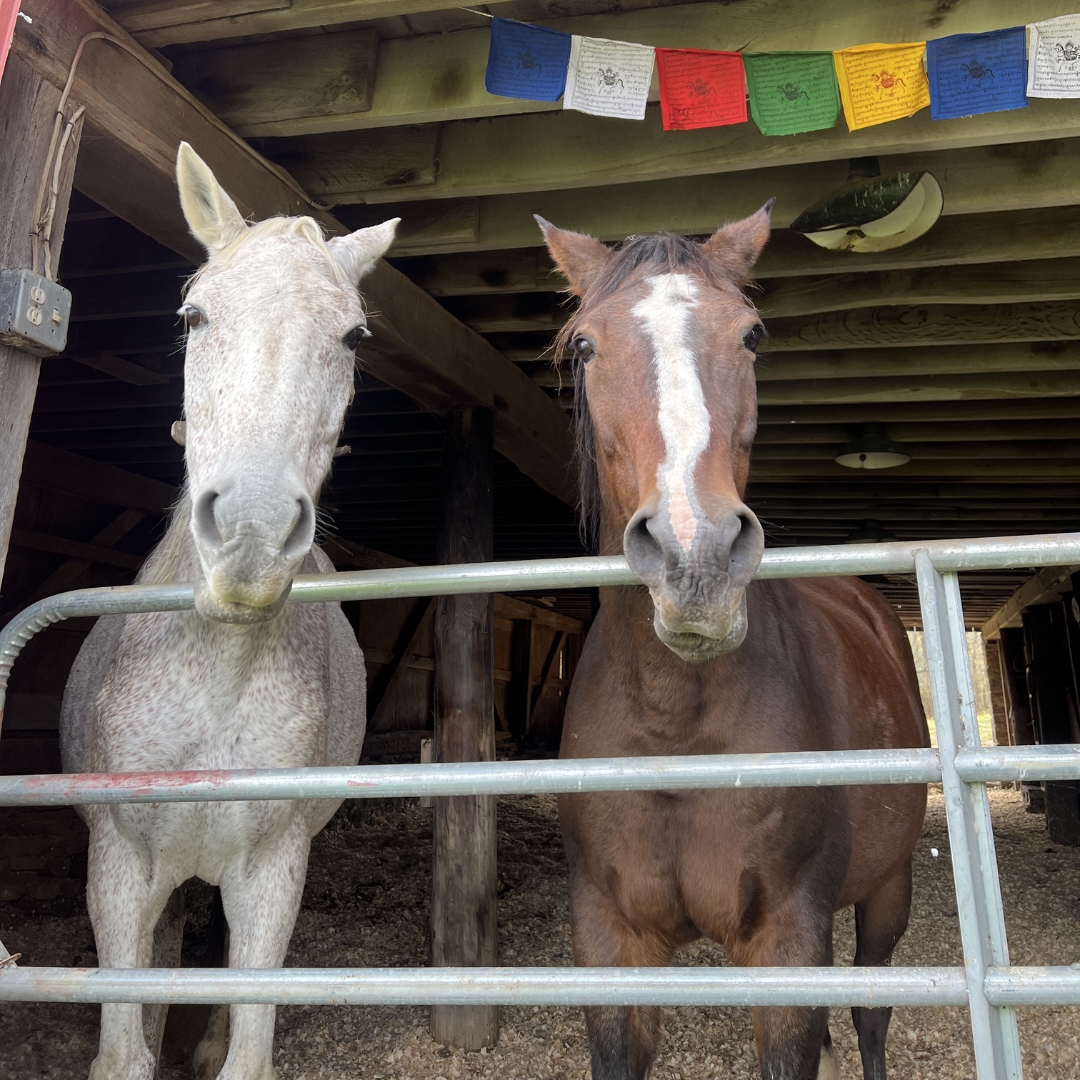
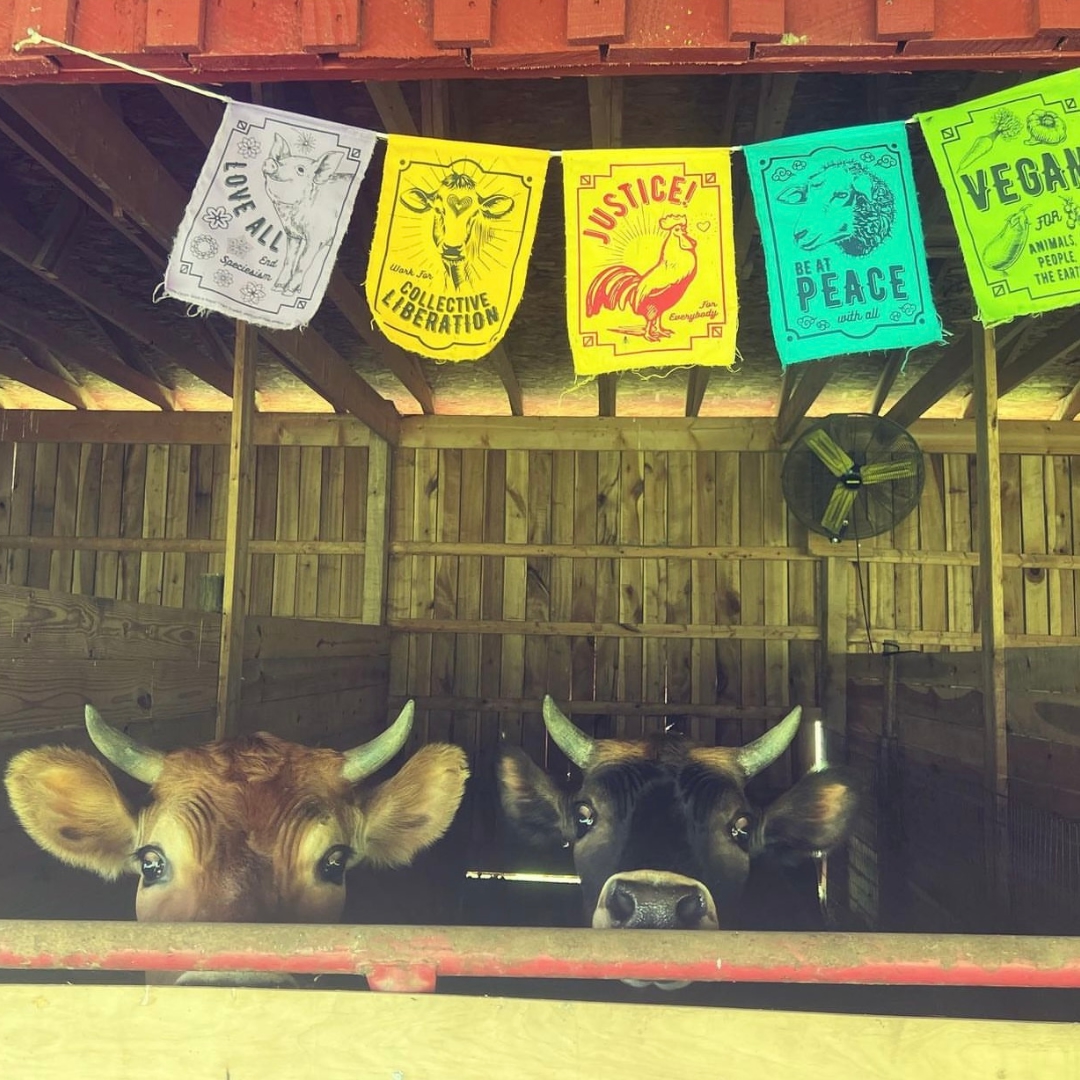
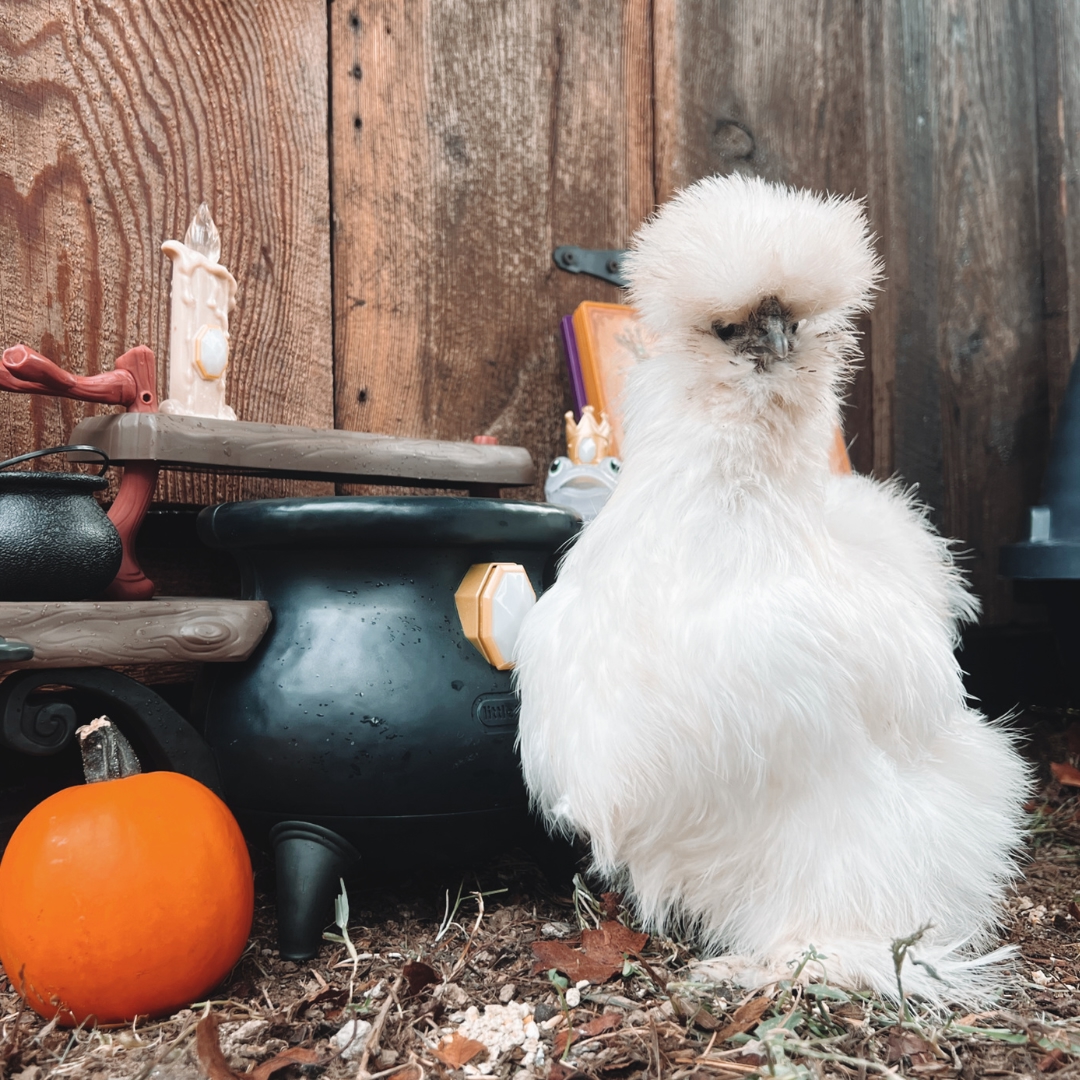
BM: Around the same time, less than a month later, I was able to rescue two rabbits off of a slaughter truck over in Brooklyn. My friend lives there, so we were doing the same kind of monitoring, and the rabbits were outside of a small slaughterhouse, so I was able to take them home. After that, I just kind of kept accumulating. I already had a few rescues of my own, horses and dogs. But after that, I got more into farmed animals. So, I started rescuing cows, at that point, and more chickens.
LK: How many animals do you have now?
BM: We had a few losses this year, unfortunately. So, right now we have 17 animals.
LK: Can you maybe share a little bit about day-to-day operations for you there at Misfits Coven?
BM: I live on the property. Well, I lease the property from my father. He owns it, and he lives right next door to me. So, I live on the sanctuary with the animals. They’re all in my house, and in my yard.
From the morning, until I go to sleep, basically my whole day is centered around the animals—getting up and getting everybody fed, making sure everyone is safe, everyone has what they need for the day, their food and water, and all their enrichment. I basically do everything myself. I do all the health checks, and also spending quality time with them, grooming them, taking them to their vet appointments. We do have some vets that come out here.
LK: It sounds like a full-time job.
BM: I don't get paid or anything. We are a 501c. We gained status about 2 and 1/2 years ago now, which has been very helpful. We’ve been able to do more because of that. All my money goes into the sanctuary. But since becoming a 501c, we have had more outside support, which is really nice.
LK: Everyone I’ve spoken to for this project has said how much this takes up their time. Maybe it’s hard to travel, or take vacations—this goes above and beyond finding a pet sitter, right? Do you have other folks there who volunteer?
BM: My dad is actually my number one supporter. Our houses are right next to each other on the property. He helps me a ton with maintenance around the sanctuary. When I leave, he’s able to take care of everyone. So that’s extremely helpful. We also have a reactive dog here, that I rescued about five years ago, and he can only be around me and my dad. He’s very fearful and aggressive to anyone else.
LK: Is that what “reactive dog” means? Like, a dog that easily reacts to that kind of stimuli?
BM: Yeah, it's not always aggression; it can just be fear. He’s very good with animals. He’s just not good with human beings. He was heavily abused when I got him, so he is terrified of anyone who’s not me or my dad.
LK: My mother has a dog like that. I didn't know the term for it. She’s very anxious, and she doesn’t acclimate to anybody else except my mother. Even my father—he’s been there the whole time, but she still runs away from him.
BM: That’s really nice of your mom, to take care of her. I know it’s really difficult to take care of dogs that have issues like that.
LK: My mom was volunteering at a shelter in south Georgia. It is not a well-funded facility. They were having a promotion for adoptions before the holiday season. And my mom knew that any dogs that were not adopted would get put down.
And, you know, all the other dogs were jumping up and down and friendly. But this one dog was sitting in the corner, with its back to everybody else, just cowering. So, mom took that one! That's Sadie.
You said you were vegetarian and vegan from an early age and involved in animal rights activism early on. Was your dad an inspiration? Does this come from him? Or, how did you, sort of, end up on that path?
BM: My dad is actually kind of the opposite. He's a lifelong hunter, fisher, and outdoorsman. My mom’s always been very kind to animals. She always took care of wildlife and would rescue all the strays in our neighborhood. She was a big influence. And, my dad always supported her doing that. So, they did help in that way.
When I was in 6th grade, I met a girl in my school that was vegetarian. I loved animals before that. They were always my life. And I remember her saying that she was vegetarian because she loved animals. I was, like, “I love animals, so I guess I'll be vegetarian.” And so that was a huge influence—meeting someone—because I hadn't before that.
I was vegetarian until my early 20s. It was when I went to college, I guess, that I went vegan.
I had met someone previously that was vegan, and I remember they weren't necessarily vegan for the animals; they were vegan for health. But they did like animals. And I remember thinking, “Oh, that's extreme. I don't have health issues. I don't need to do that.”
It took me a while to fully be vegan. But, once I started seeing, I got into looking at PETA a lot, and all of these groups that would post undercover videos, showing the cows being separated from their babies. I thought, “How did I not know that?”
LK: I looked a little at your website beforehand, and it seemed like y'all do some amount of public programming, with ways that people can tour and learn. What are some of those kinds of activities or events that you organize there?
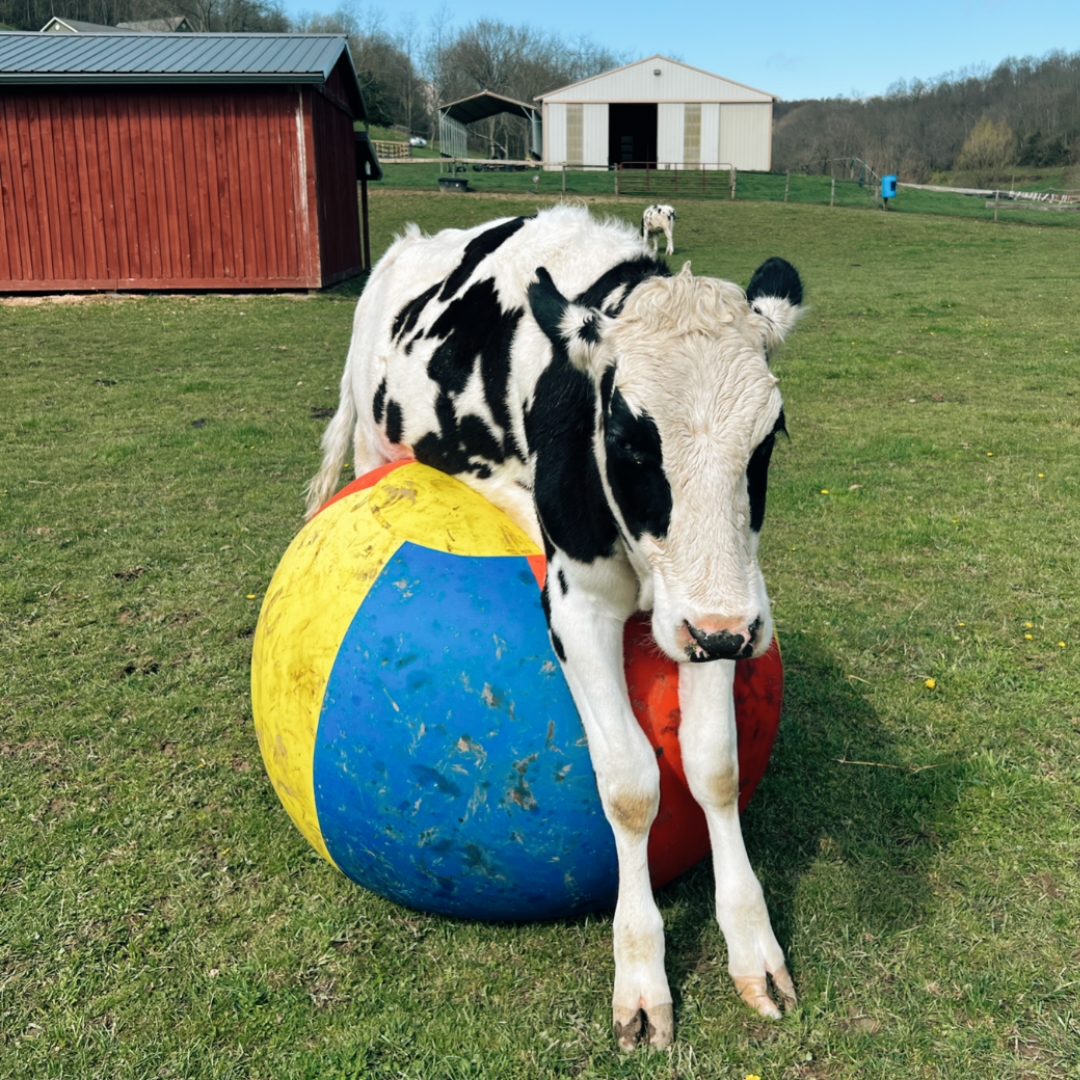 BM: Yeah, we let anybody come out and visit. We're not age restrictive or anything. We
love having non-vegans here, especially so they can see the cows and see the chickens
and make connections with them. I think that’s really important. We’ve had a lot of
people come out and see the cows playing and cuddling. They always say, “I didn't
know they were like dogs. I didn't know they were so nice or so personable.” So we
love having people come out to visit.
BM: Yeah, we let anybody come out and visit. We're not age restrictive or anything. We
love having non-vegans here, especially so they can see the cows and see the chickens
and make connections with them. I think that’s really important. We’ve had a lot of
people come out and see the cows playing and cuddling. They always say, “I didn't
know they were like dogs. I didn't know they were so nice or so personable.” So we
love having people come out to visit.
We also love having volunteers because it’s very helpful. We’ve had a few public volunteer days where we’ve had several people out, versus just scheduling privately. Those have always been really fun and inspiring. And we started doing actual community events here. We’re doing one in the fall, and we had our first one in December. It was a Krampus party. That was very fun. A lot of people braved the cold to come out.
We also like to go to a lot of community events in Pittsburgh or our surrounding area and table—hand out resources and vegan guides and information about our rescue.
LK: How many people do you think visit in a given month or year?
BM: It definitely has gone up the last few years. My boyfriend helps me a lot now, so that's given me the ability to have people come out more frequently. Right now, we have a handful of people come out every month.
LK: Do you get a noticeable number of non-vegans?
BM: Yeah, we do. I will say a majority of the people that help support us—donation-wise and supporting us online through social media—I'd say a huge number of them are not vegan, which I find very interesting. I do love that they follow us and see the animals. And I know people that have gone vegetarian, so I'm hoping that we can keep showing people the reality.
LK: I'm curious to get your response to the story from Jainism about the king, the pigeon, and the hawk. That's the story that inspired this project—the dilemma the king faces of how to save the pigeon who's fleeing the hawk, and how to save the hawk who's starving. I'm curious if that resonates with you, if you have any examples that reflect a similar dilemma.
BM: Kind of. I think it ties into one of the questions you had regarding carnivore animals at the sanctuary. I have cats here. And, we don't have any fish at the moment. But I love fish. They're one of my favorite animals. I've rescued a lot of fish in the past. And it's a huge part of why I'm vegan, too. But all of the cats I have all have health issues. And so they can only be on fish diets right now, since we don't really have vegan alternatives to that.
That's something that I think about frequently. Every day when I feed them, I always feel bad about that. And I try to do actions to balance out karma in the world for that, trying to help fish.
But in terms of the story itself, I feel I hear a lot of people say that animals were placed here for us, whether [these people are] religious in any way or not. But I think that, human beings have the intelligence…. Or maybe that is not the right way to say it, because I feel all animals are very intelligent in their own way. But human beings have the technology and the ability to eat pretty much anything that we can, and I think we owe it to choose a compassionate way, versus the hawks out here that can’t decide to go vegan, or the foxes on our property we have that can’t decide to go vegan. So that’s something I try to tell people all the time.
LK: That's actually the rationale in Jainism, as well. It has to do with different kinds of sentient beings with different capacities. They see animals as sentient, people as sentient, and plants, rocks, and other things as sentient. The difference is, sort of, impulse control. So, beings that are able to refrain from violence, should refrain from violence, right? Not all beings can. And so that's the dilemma of the story—when you're faced with the rawness of nature, how do you respond?
You mentioned fish. Do you keep aquariums or do you rescue fish?
BM: I have two right now, but I don't have any fish in them. It’s been something that has been on my list. I really want to get more fish. But I stopped having them. I had bettas mostly for a while. I started getting them surrendered, and I had a friend that had a few. The store Meijers surrendered about 30 of them to her sanctuary in Michigan, so I took a handful of them at the time. They were all in terrible health conditions, and it was so devastating.
So, really, I don't like the hobby at all, and it just makes me so sad. After I had [these rescued bettas] and they passed away, I rescued a few shrimp and had some other fish, but then I kind of stopped so I could do more research. There’s a lack of adequate research out there. I actually found a fish vet in Pittsburgh, so I've been talking to her a lot the last couple of years, and I'm just trying to make sure I’m prepared. I just don't want to bring fish here and then something happen to them. So, that's been my hesitation lately. That, and funding, too. It does cost a lot of money to get them what they need, and I've had so many other issues here at the sanctuary.
LK: I think the fish trade is another kind of moral dilemma. I think about this one a lot. I got really into the aquarium hobby, at first, because a neighbor who was moving just left their fish on my doorstep when they moved, even though I had said I didn’t want them. And that was my introduction to the whole hobby of keeping aquariums. And I quickly learned that what they tell you in the stores is often wrong. I ended up on online forums, learning about what it means to cycle a tank, and what the fish really need, the size requirements, which fish are schooling fish, and all that.
I guess the dilemma is related to why a lot of sanctuaries have a policy against purchasing animals—because it contributes to the economy of buying and selling farm animals, right? I try to avoid shopping in big pet stores precisely because of the bettas. It’s the bettas—I see them in those cups, and I think, “I could get tanks up and running, and I could just rescue all these bettas.” And then I would buy 15 bettas off the shelf, and the next day there’d be 15 more bettas on the shelf. That really upsets me—being unable to help the animals that are immediately suffering, because I know that by purchasing them, I’m contributing to that pet trade.
BM: I still follow a lot of the forums online and on Reddit. There’s a lot of fish people on there, and they're mostly very compassionate. In the betta forums, they’re all kind and helpful and want to do good for the bettas. But almost every day there’s somebody posting a photo, saying, “I saw him in the store, and he wasn’t doing good, and I had to bring him home.” And I totally get it. But you are supporting the trade. Even if he was only a few dollars or on sale, you’re still showing them that there’s a demand.
LK: Maybe accepting surrendered bettas is a way to have tanks while minimizing contributing to that economy.
BM: Yeah, I know a lot of Petcos have their own policy on how they treat sick fish, but when I was rescuing more of them, I had given my information to a few stores and said, “If you have a fish that's not doing well, or one you're going to put down, can you please give them to me?”
And it did work a few times. My local PetSmart actually did that. They had called me before, and I have friends that do the same thing in different cities.
LK: With all the animals that need homes, there’s plenty of ways I could end up with pets that don’t involve buying them.
BM: Yeah, definitely. I feel like a lot of people don't think about that when they want a specific animal. I try to tell people all the time, even if you want a certain dog breed, you can find a rescue. There’s so many. A lot of our Pittsburgh shelters, they get animals in there that you wouldn't think. They’ll have chickens come in, they’ve had rabbits, they’ve had fish occasionally, they’ve had ferrets. And, also, so many people post animals for free on websites like Craigslist or Facebook Marketplace, too.
LK: Do you have any other so-called exotics at your rescue now, or is it mostly farm animals?
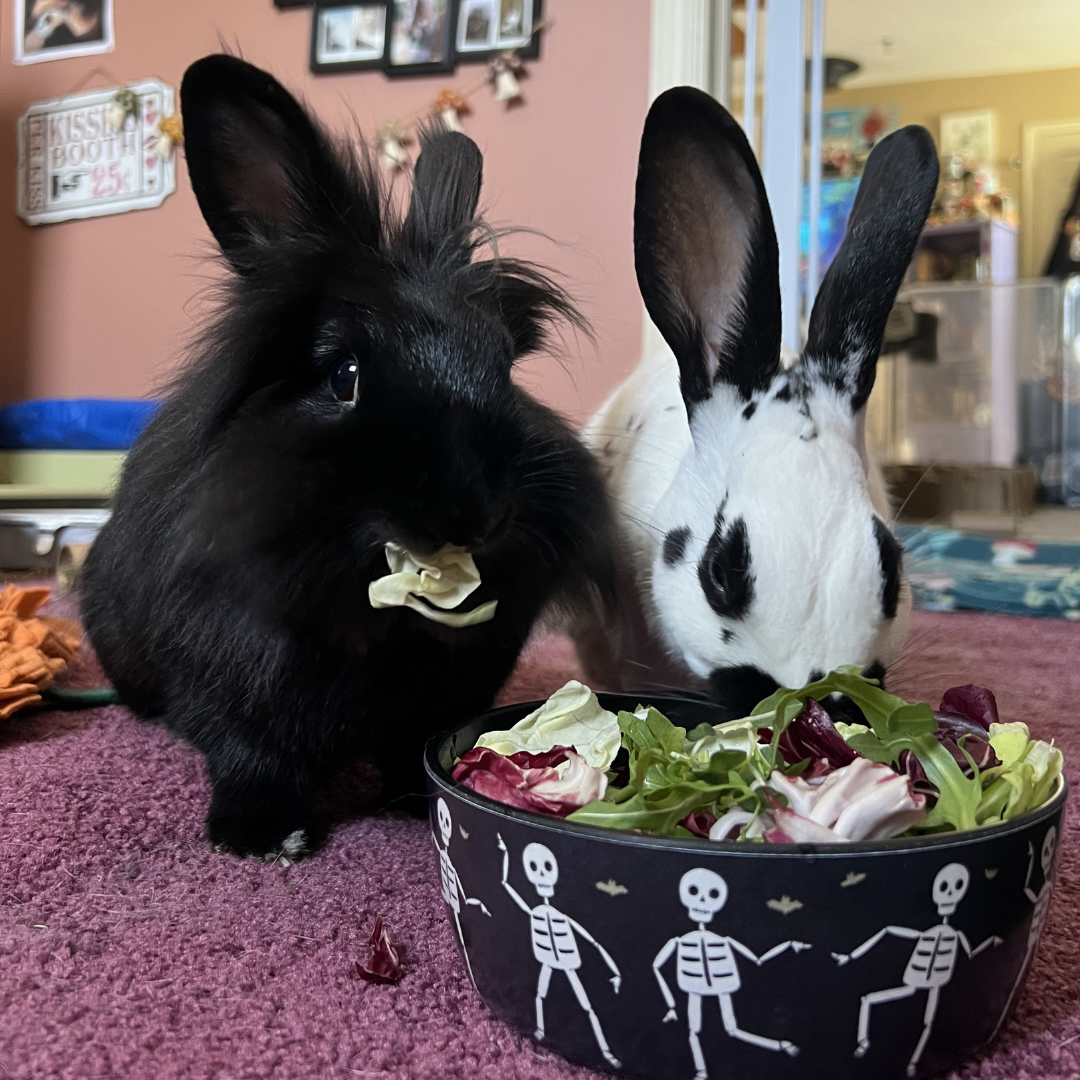 BM: I have two rabbits right now. Of the two that I said I rescued from the slaughter
truck, one of them passed away a few years ago, unfortunately. But I still have the
boy from that rescue. And then I have another bunny—she’s a little tripod with only
three legs.
BM: I have two rabbits right now. Of the two that I said I rescued from the slaughter
truck, one of them passed away a few years ago, unfortunately. But I still have the
boy from that rescue. And then I have another bunny—she’s a little tripod with only
three legs.
She was a surrender from a family. The children had accidentally dropped her and shattered her back leg. They couldn't afford to do surgery on her. So, I had a coworker set me up with getting her surrendered.
I made the mistake at the time of getting her a plate put in surgically, because it was a cleaner break, so we thought her leg could be repaired. I spent a ton of money on getting a plate put in, and she ended up bending the plate, and it caused her more pain. But then she had the amputation, and after that, she was totally fine. She recovered great. Animals adapt well to that.
LK: How interesting. Some other people have talked about the challenges of finding veterinary care for animals that are usually slaughtered, because keeping them alive as they age is often not the goal of veterinary care. Have you run into that kind of problem?
BM: Oh yeah, very much, especially with chickens. That's the main one. We thankfully now have a really great vet for chickens that is less than an hour away. The bad side though is they don't really have emergency hours or anything. And the only other vet clinic from us is in West Virginia; they do emergencies for chickens, but they only have one or two vets that see chickens. So if they're not on call, then it’s not helpful—so we basically don't have an emergency vet right now for chickens. So that gives me a lot of stress.
We only have one vet right now for our cows. And basically below Pittsburgh is her whole domain. And that's very stressful, too, because she's very busy. We're one of the only sanctuaries, but she's very kind to us and loves the animals. There's a ton of farming around us, so she does care for them and farm shows and stuff. So yeah, it's been stressful trying to find that care for them.
LK: Is there anything else that you'd like to share?
BM: I’m familiar with Jainism as a religion. Our sanctuary is rooted in paganism, so that's my spiritual background, and kind of how I go about treating the animals, too. We believe the land and all creatures are sacred. A main tenet of our religion is “harm none.” When I saw this was Jain studies sponsoring this interview, I was really excited about that, because I feel like those go hand in hand very much.
LK: That’s really fascinating. Would you like to share a little more about that? Do you follow a specific path that informs the sanctuary work or your own personal practice?
BM: My boyfriend and I kind of have our own path of Appalachian paganism, but it's rooted in Wicca—a main tenet is, literally, harm none. I got into Wicca years ago, because I was already vegan and practicing witchcraft, and I thought, “Well, this is why I'm spiritual.” And I believe everyone that practices [Wicca] should be vegan. So, that's another reason the sanctuary came about—to harm none and inspire compassion.
LK: The Jain rationale for nonviolence is because so many different kinds of physical forms can house souls. There’s a distinction, right, between the soul and the material world, and many material forms can house souls—rocks, plants. What's the philosophical basis in Wicca for the “harm none” philosophy?
BM: It’s similar. They believe that the earth is its own spiritual being, and nature is worshiped, and all the trees matter, and the soil matters, because it brings us the trees and our food and everything that builds us. This is why I believe that everyone that is pagan should be vegan. I wish that was something that aligned more frequently. Unfortunately, that's not always a common thing, but there are a lot of vegetarians and vegans in the movement. It's not as well known, so that’s something that we try to promote here.
LK: When you think about nature being worshiped, I wonder if you think about it in terms of individual entities, like individual trees, as it were…. The Jain perspective would be that the individual tree is an embodied soul; it has an individual soul. There’s a stress in Jainism on the individuality of each soul.
In other dharmic traditions, sometimes the philosophies are very different. Some might say that there is one God who is singular and infinite. In the non-dualistic schools of Hinduism, you might also say that all of nature is sacred, but in the sense that everything is a manifestation of God. We’re essentially all one, right? We're all unified. And in that sense, right, everything is spiritual, because everything is God, and we are a part of that. So Jainism’s views on the separateness of individual souls, and the distinction between souls and matter, are different from the non-dualistic Hindu perspective.
When you think of nature being sacred, how do you conceive of that?
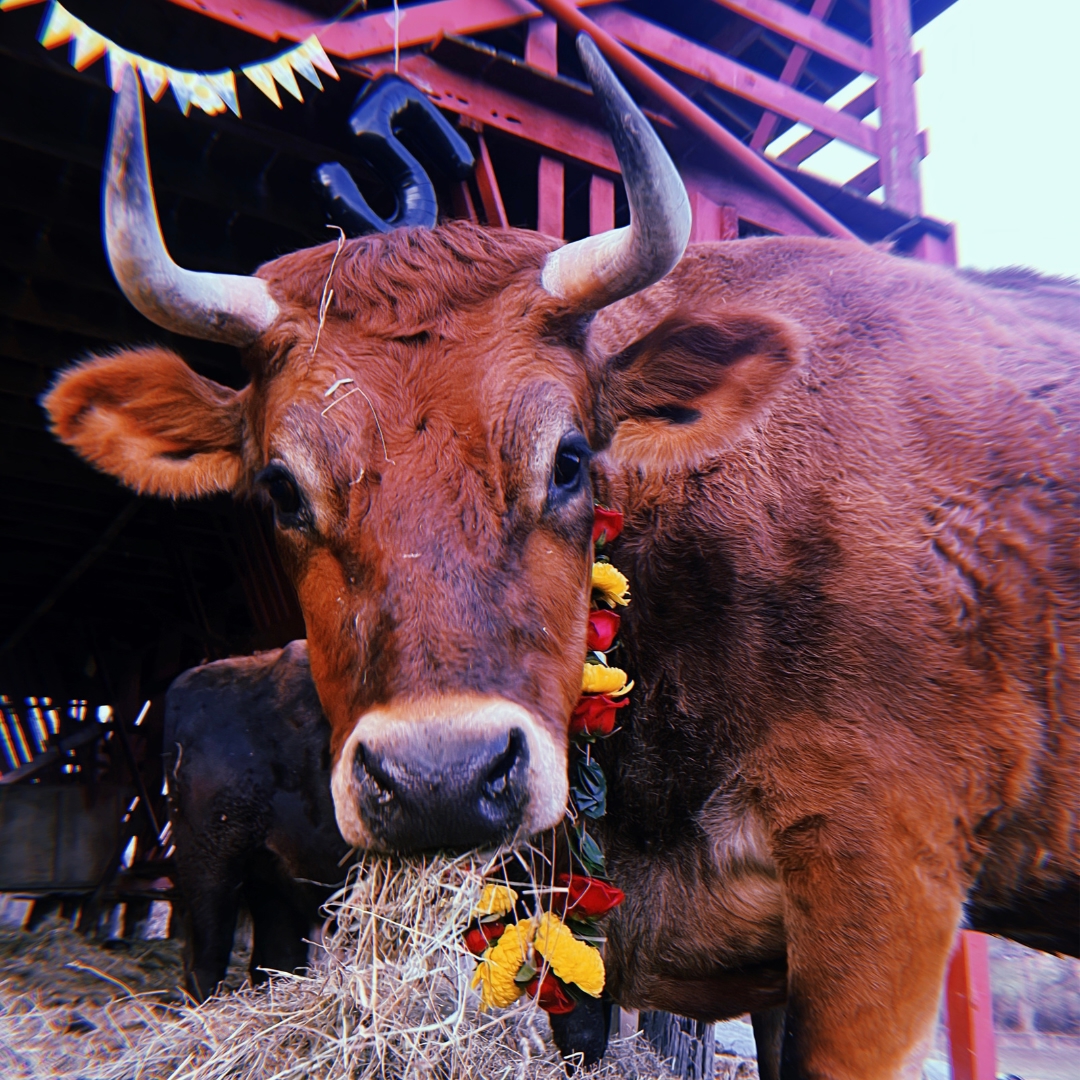
BM: We follow more of a Druid path—we worship and protect nature, and we believe that each tree has its own soul, that it is its own individual, and that its been through a lot. It has lived many lifetimes, and helped so many animals, and helped so many people. We feel life all around us. We are also a certified wildlife habitat here. We believe in preserving nature through wildlife protection, advocacy, and local litter cleanups. All beings are welcome here. Our property is about 70 acres, most of it is wooded, and there is a sacred creek that runs through it—which supplements both our animal residents and the wildlife. We believe the sanctuary land and its elements are powerful and healing, so it feels magical having both types of sanctuary here, wildlife and farmed. That's how we feel about our property here.
We’re not a part of a specific Druid organization ourselves, but we do take a lot of information, and inspiration, from prominent groups.
*Editor’s note: For further reading on Wicca, Druidry, and other pagan paths that have informed the work at Misfits Coven, Britt suggests the following web resources:
- Misfits Coven Animal Sanctuary
- Scryer Myers, the website of Misfits Coven's board member, volunteer animal caregiver, and Coven partner, Jason Myers.
- Order of Bards, Ovates, and Druids
- Cabot Kent Hermetic Temple
- The Wild Hunt, featuring pagan news, history, and modern perspectives.