 University of North Texas

Our Jain studies project in animal ethics is inspired by the story of King Megharath, who faces both a pigeon and a hawk seeking his help and protection. The pigeon is fleeing the predatory hawk, while the hawk, an obligate carnivore, seeks a needed meal. King Megharath confronts the difficulties that arise when we choose to intervene in the name of compassion. Our first interview takes us straight to the heart of King Megharath’s dilemma. Readers should be aware that the personal narrative below contains a frank discussion of the practice of “live training” for predatory animals as part of the rescue and rehabilitation process.
The conversation features Prudi Koeninger, the founder and current president of the DFW Wildlife Coalition. In addition to outreach and education efforts, the organization runs the DFW Wildlife Hotline staffed by over sixty volunteers from 7 a.m. to 10 p.m. daily. These phone agents provide solutions for callers who encounter injured or orphaned animals, making connections between licensed wildlife rehabbers, wildlife centers, rescue organizations, and government agencies. The hotline also offers advice to aid residents in cohabitating with the wildlife who have adapted to thrive in our urban centers. We encourage readers to explore the Animal FAQs at the website DFW Wildlife Hotline, which contains a wealth of information that Prudi and her colleagues have gathered over the years. The FAQs are organized by animal and contain detailed advice for how to handle animal emergencies, how to decide when to intervene, and how to share the yard with wild neighbors.
In our conversation with Prudi, we learn more about her work and her philosophy regarding the coalition’s approach to animal rescue and rehabilitation.
This interview was conducted by Leah Kalmanson for the Bhagwan Adinath Animal Humanities Initiative in partnership with the UNT Oral History Program. It has been edited for length and clarity. All photos courtesy of Prudi Koeninger.
Leah Kalmanson: Thank you again for speaking with us! I wanted to start out asking about your background and what brought you to the DFW area.
Prudi Koeninger: I relocated from West Texas to the DFW area in the late 80s for a career opportunity. I've seen a lot of growth in the Metroplex. I was in commercial real estate for 15-plus years. I had an opportunity to start a home-based business in medical billing in the niche market of mental health providers. I worked from home, which allowed me some flexibility with my time.
 [Getting into wildlife rescue work] was very unintentional. I did not have wildlife
on my mind whatsoever. I was really focused on my start-up business. My husband was
a police officer in Highland Park. He got a call from a resident who was complaining
about scratching in the wall. The elderly lady would not let him leave until he cut
a hole in her wall and retrieved a newborn raccoon that fit in the palm of our hands.
The raccoon still had its umbilical cord.
[Getting into wildlife rescue work] was very unintentional. I did not have wildlife
on my mind whatsoever. I was really focused on my start-up business. My husband was
a police officer in Highland Park. He got a call from a resident who was complaining
about scratching in the wall. The elderly lady would not let him leave until he cut
a hole in her wall and retrieved a newborn raccoon that fit in the palm of our hands.
The raccoon still had its umbilical cord.
He calls me, and says, “You got to come get this raccoon or it's going to die.”
I blindly jump in the car to go get the little raccoon. I fell in love instantly. I have absolutely no clue as to what to feed it, what to do. I just knew it needed care, and at that point, neither of us even knew there were people called “wildlife rehabilitators.”
The whole wildlife rehabilitator community has grown significantly in the last 30 years, but back then it was limited to just a few individuals that rehabbed mammals from their homes.
I went and I got some formula, and I started feeding the baby. I had no clue that
you were supposed to stimulate this little animal so that it could urinate or have
a bowel movement. In spite of everything I did wrong, it survived. We fell in love….but
we didn't realize at the time, we were breaking the law.
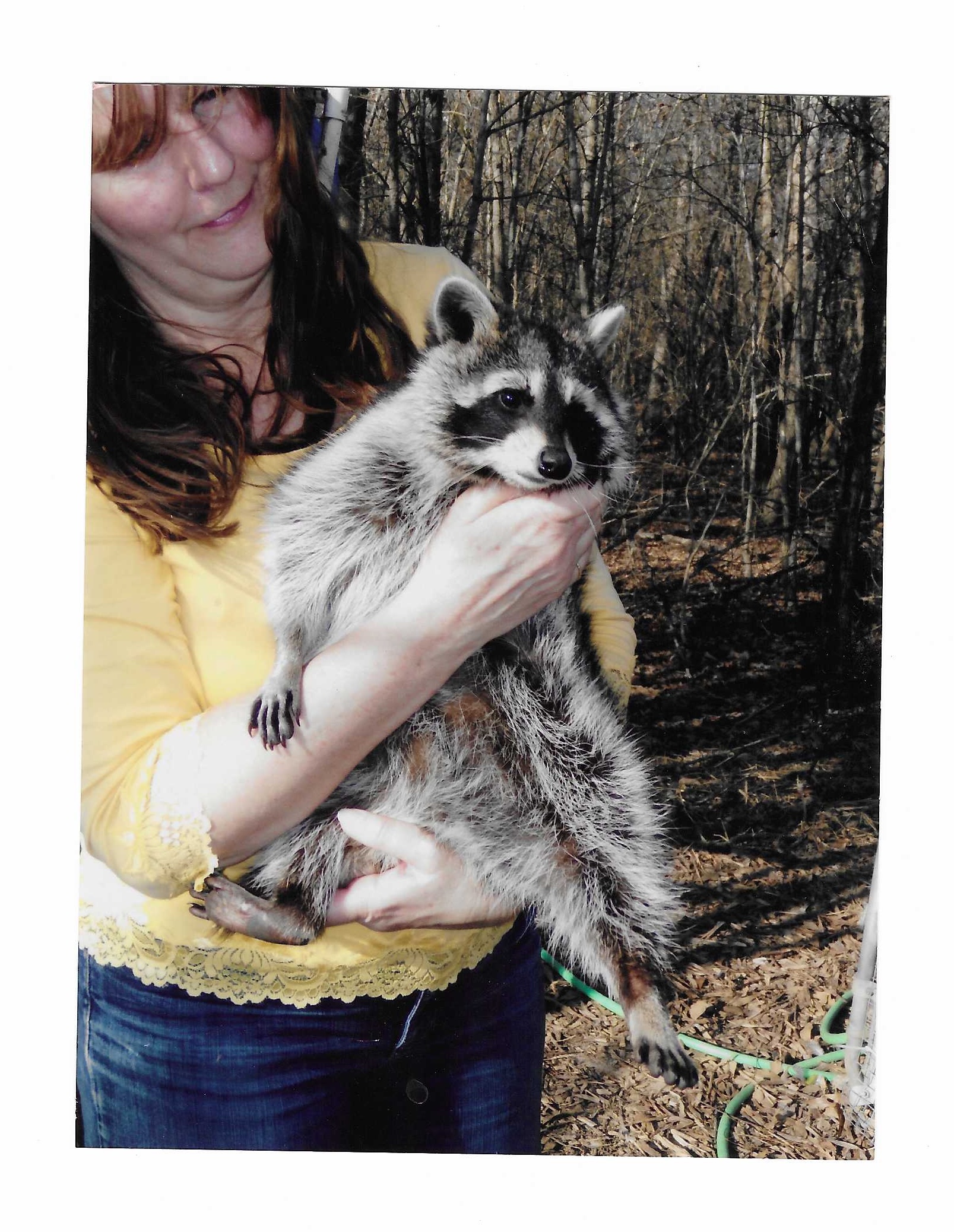
By the time [we knew], he was habituated. We had taken his claws out, which I feel
horrible and regret to this day. But Rascal—which was his name—was not a candidate
to be released into the wild
LK: How long did you keep Rascal?
PK: Until his natural death. Which was about 15 years later.
LK: Did he interact with any other pets that you had?
PK: Yes, he interacted with pets. He had his favorites!
LK: Can you tell us a little bit about the origins of the hotline, and maybe take us up to date on the status of that hotline now?
PK: About a year into Rascal’s life, my husband and I found out about a wildlife rehabilitator who did opossums. She invited me to a wildlife meeting in Fort Worth. I met several rehabbers, and I thought—okay, cool. I didn't disclose that I had Rascal, because at this point, we were so protective of him, we did not want anything to happen to him. This is when I learned there were people that were called “wildlife rehabilitators.”
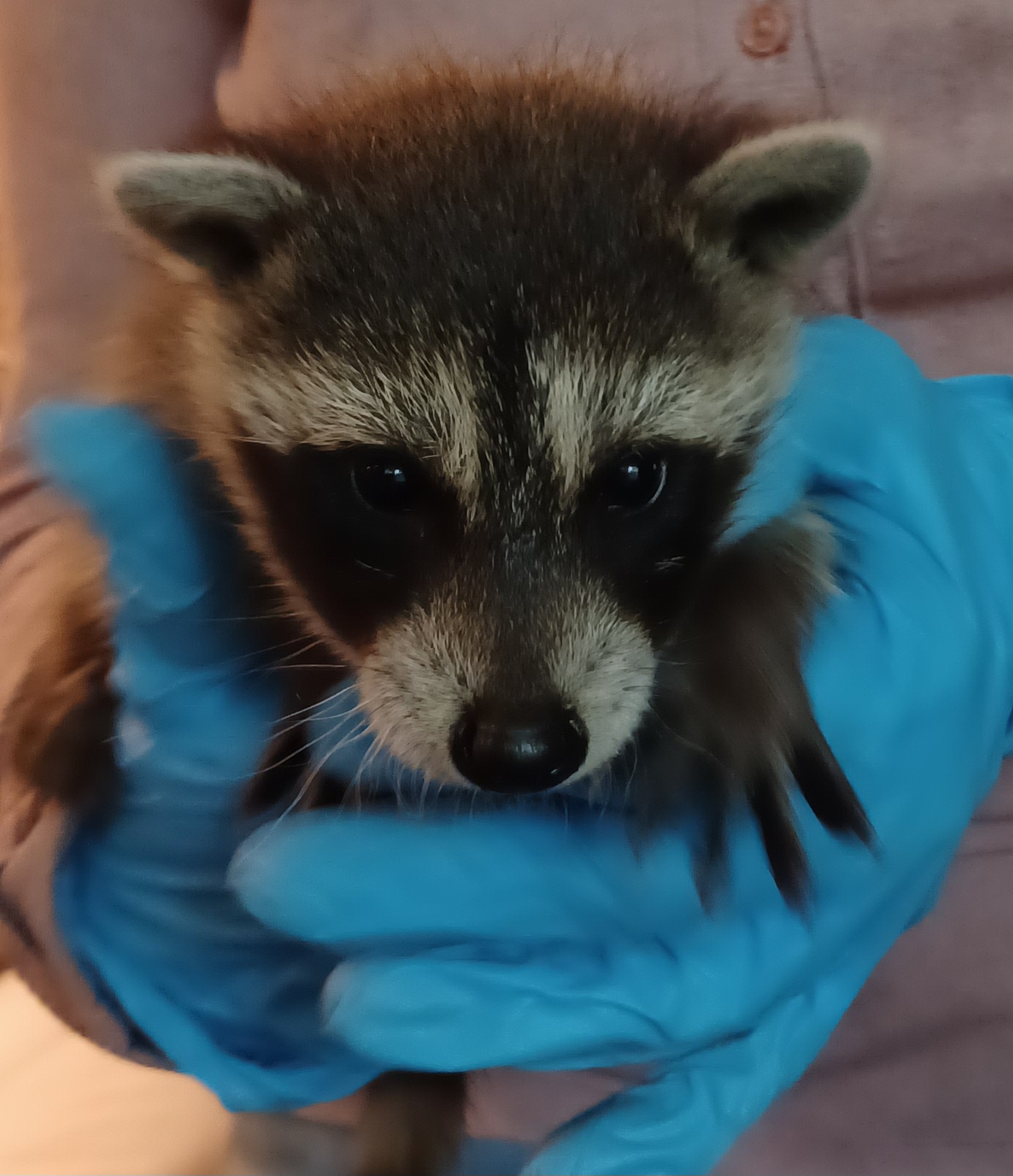
The next spring rolled around, and my husband came home with two older baby raccoons. I opened up the box, and the babies growled at me as if to say, “Hey, you put your hand in here. We're going to bite it off and hand it back to you!”
They were ferocious. I thought: I don't need this. I don't want this. I'm trying to run a business. I don't have time for this. I get out the list of rehabbers, and I call all of them, and nobody will take these two raccoons.
Finally, the last lady I spoke with told me no. I said: Okay, I raised a raccoon, and I now know it was wrong, but would you at least show me the correct way? And she said, “Come on out.” I loaded up the two raccoons and went to her house. She and her pot belly pig opened the door—and she invited me into their home, and I got a tour of all the different animals in every room. She had squirrels, raccoons, and a rescued rat from New York. We went out to the patio. She [picks up one of these] snarly raccoons, [by the] scruff, pulls it out and starts stimulating it—and it starts purring! I was amazed.
 She showed me how to properly feed and sent me home with formula. Within a couple
of weeks, she brought me her four raccoons she'd been raising. And it started from
there. The word got out that I was doing raccoons. [After that] first season with
her, the next season people were bringing me buckets of raccoons. I rehabbed 80 raccoons
that year.
She showed me how to properly feed and sent me home with formula. Within a couple
of weeks, she brought me her four raccoons she'd been raising. And it started from
there. The word got out that I was doing raccoons. [After that] first season with
her, the next season people were bringing me buckets of raccoons. I rehabbed 80 raccoons
that year.
I learned that there were wildlife conferences. I went to several conferences, North Carolina, Arizona, and Canada, to name a few. I was going to every conference that I could. At that same time, people in the wildlife community were starting to develop literature and ways of coexisting with wildlife….
I learned how to evict a mama raccoon [in a way that doesn’t] orphan the babies by using sound, light, and smell as deterrents. Individuals, animal control, and pest removal services were all trapping and leaving the babies to die or bringing them to rehabbers. This was valuable information. I thought: How do I get that message out there to stop the orphaning? I knew I couldn't keep rehabbing 80 raccoons/year. There were not enough rehabbers to keep up with the orphaning.
I had two sub-permittees rehabbing baby raccoons for me. I came up with the idea of a hotline where we could educate the caller on how to evict a mom and keep the babies with their wild moms. There were solutions for re-nesting baby birds, or knowing when an opossum needs to be rescued. There was lots of information [to share]. We could educate and reduce orphaning and euthanize as well as educate on conflict resolution.
One volunteer was a techie; she came up with the phone system. The second volunteer was involved in a program called Master Naturalist. Master Naturalists have to have volunteer hours to keep up their certifications. We felt this was a pool of volunteers we could encourage to volunteer for the hotline. The knowledge I gained from the conferences gave us the what to do for evictions, reunification, conflict resolution, etc. I pulled all this together and created a training binder for the hotline volunteers.
In 2003, we started taking phone calls…and our first phone call was an alligator! Wow. That's not what we were expecting. It was in January, and it was a young lady whose significant other had decided to leave, and he left his alligator behind. She had this huge tub/ tank in her garage with this alligator that she did not want. So, one of my partners did the research to determine what we needed to do. She called down to Brazos State Park, and they said, “Yes, come in April, and you can release that alligator here.” So, in April, we went to the lady's house, captured the alligator, and put it in a carrier. At that time, I drove a Volkswagen. We laid the back seats down and placed a huge carrier with the alligator looking between the two of us! And headed for Houston.
We got down there, and the park ranger said, “please,” you know, “low profile.” He didn’t want us to draw a lot of attention. Famous last words! It was Earth Day. It was full of people. We went to where he told us to go, and we had to sit there for hours until people started going home for the evening, until we finally decided it was safe to get this alligator out. We're getting this big pet carrier out, walking it to the edge of the water area, and out of the woods comes this whole group of people that have been walking. So, they end up seeing the release. It was all okay. That was our first call.
Our first year, we had 300 calls. When 2004 rolled around, we had 3000 calls, and began having volunteers. Some of my original volunteers from 2004 are still with the hotline, which is pretty unheard of—that's 21 years of giving two hours every week.
That's how and why the hotline was created to communicate the appropriate response for the public before they either harmed an animal or orphaned an animal. That was the whole purpose. And now we get about 15,000 calls a year.
In a good majority of calls, we can say—put it back. It doesn't need rescuing. We can explain how to encourage a mother raccoon to take her babies and move out of your attic. There's lots of tricks and things to share with the public. Trapping is not the solution. You want to trap an animal because you don't want that animal in your yard. But you need to understand why it's coming to your yard, and address those issues.
Editor’s note: To see more of these tips and tricks, visit the Animal FAQ page at the hotline’s website. www.dfwwildlife.org.
LK: I’m interested in your perspective on some of the larger philosophical issues that interested me in starting this project. As you may know, Jainism is a religion that promotes nonviolence toward animals, and running animal sanctuaries is a longstanding practice in Jain communities. I shared with you the story of the king who has to decide how to protect a pigeon from a hawk, while also protecting the hawk from starvation. I think a lot about animal rehabbers who are working with prey animals, who take all the time and effort to get them healthy, and who then put them back out into a context where they will likely be subject to predation. I also think a lot about what might be involved when a rehabber agrees to work with a predator animal. This is an open-ended question. I'm just really curious about how you approach some of these questions yourself.
PK: It does require some thought. Raccoons were my first species to rehab. [raccoons need to learn to find their own food.] For live training I used crawfish. They were always curious and would pursue a crawfish more so than a minnow. I introduced them to raw chicken. And eggs—show them that there's something in the egg. Hide and provide nuts for them to learn to find and open. Hunting and foraging are instinctual.
I branched off and started rehabbing other animals, such as foxes. In wildlife rehabilitation, you want to introduce the natural diet. The ultimate goal in wildlife rehab is to have an Olympic-conditioned animal to release in a suitable habitat where it can flourish.
With foxes, a foundation of canine food, or kibble. When available small rabbits, mice, etc. that may have been animals that did not survive rehab, commonly referred to as recyclables. Also introduce eggs and some chicken. Before releasing the foxes, live-train with mice or rats.
Live training can be difficult/upsetting however, when you rehab you have to prepare that animal to be able to survive and if you cannot do that you should not rehab that species. You have to have a cage that will contain the prey. [The first time] I put rats in the cage…. [Sometimes] you just have to walk off and go to your house, and not think about it. By this time, we had moved to 80 acres, and I had my cages out in the woods, because I was trying to give [the foxes] the best natural environment I could. I went back the next day, and two of the three rats were gone. One little rat found a way to hide, and either my three foxes didn't want him, or he outsmarted them. But I couldn't even get to him, and he continued to live in that cage the next week until I released the foxes. When I released the foxes, I just left the cage open so that little black-and-white spotted rat could live in my woods….
With live training, my philosophy was, and still is, hunting is instinctual. Foxes—their natural instinct is going to be small prey. I have to do live training, in my opinion, one time, to know they do have that instinct. [The foxes] showed me [once], and I didn’t feel like I had to do it for an extensive amount of time. So, therefore, that's how it can be easier on you as the rehabber.
A couple of years later, I had coyotes…. And I had to live-train with something larger, which was rabbits. And that was very, very hard on me. It was hard. I'm not going to say that it wasn't. It was very, very hard. When rehabbing coyotes, you must feed an all-natural diet with no kibble. I reach out to my wildlife community, for recyclables (little rabbits, squirrels, etc.). I also actively look for good/recent roadkill. When a natural source is not available, purchase feeder mice and or feed raw chicken.
LK: You know, I always noticed on lists of wildlife rehabilitators that they are specialized in certain animals, and I just assumed this just about what sort of experience they had. But it occurs to me that some people may be making decisions based on whether or not they will take animals that require live training.
PK: Exactly.
LK: Thank you for sharing this. It's difficult to think about. But it's important to know about these dilemmas. Working with animals, and the natural world, we face a lot of the aspects of it that are difficult for us.
PK: It is difficult; however, that's how our Creator made it…. When you're rehabbing, your ultimate goal is a successful release.
When I had armadillos, their diet is insects, and I had a cage that I could create a compost in, a leaf compost with all kinds of little insects and critters and things in there, where they could dig and look for insects. And then one time I had minks. They eat fish, so I would put a minnow basket in our pond.
LK: Do you recommend backyard bird feeders?
PK: A better practice for bird feeders would be to plant holly bushes, beauty berry, sunflowers, etc. a natural diet in its natural form. You might get some rodents, however not the same as what bird seed attracts. If you are selective on what wildlife you have in your yard don’t hang bird feeders. Bird seed will encourage several species all the way from mice to bobcat/coyote/hawk. I recommend placing a cup or two of food in the bird feeder when you have an afternoon to sit on your porch to read or enjoy the birds. The birds are not starving. Or, if we have an ice storm, you can put a little bird seed out, just in moderation. Realize the responsibility of keeping bird feeders and baths clean so that disease is not spread.
People will become enamored with raccoons, and so they want to leave some food scraps or dog food out for the raccoons to come to their porch and eat. But what we know in the rehab community is when the raccoons are not having to forge or hunt for the food, and it's just provided, they invite all their cousins, and so instead of it being one raccoon, it might end up being 5 or 10. And then if one of them is sick, they all get sick. So, our actions very often cause outbreaks of distemper in the raccoon population.
I’d like to mention: using rodent bait boxes is harming our wildlife. Nobody wants to have a rodent problem, and I totally get that. However, the rodenticide being used is not an instant kill. Coyote, bobcats, foxes, hawks, and now we are seeing in raccoons secondary poisoning. The animal becomes compromised after eating a poisoned rodent and over time it causes immunity to be compromised and with our mammals they become victims of parasites such as mange. They experience hair loss, skin infections, and loss of weight. With the coyote they begin to sun in grassy areas in closer proximity to humans. This causes public concern and conflict. All of these animal’s hunt and eat rodents. We should encourage more natural control of rodents and exercise prevention by eliminating attractants. Our actions impact our wild neighbors from the tiniest to the largest.
Photos courtesy of Prudi Koeninger.