 University of North Texas

- Anthropology at UNT
- Courses
- Undergraduate
- Back
- Undergraduate
-
- Prospective Students
- Anthropology Major Requirements
- Minors & Certificates
- Advising and Peer Support
- Student Resources
- Larry Lee Naylor Memorial Scholarship
- Undergraduate Research/ Internship Opportunities
- Undergraduate Anthropology Student Association(UASA)
- PADAWAN Society
- Anthro-Spective Newsletter
- Career Impact
- Graduate
- Back
- Graduate
-
- Admissions
- On-Campus Master's Program
- Online Master's Program
- Dual Degree in Anthropology and Public- Health
- Courses
- Applied Thesis/ Practicum
- Costs and Financial AID
- Coverdell Fellows Program
- Re Calderon Anthropology Scholarship
- Graduate Anthropology Student Association
- Alumni Career Stories
- Graduate Student Handbook
- Forms for Current Students
- People
- Resources
- Invest
What's Happening
A quick note from the chair:
Welcome to the Anthropology Department!
Here, we’ll both share stories from our amazing alumni AND highlight what’s happening
in our department. We’ll be updating this page regularly about every two weeks, so
be sure to check back and see what’s new!
Jo Aiken
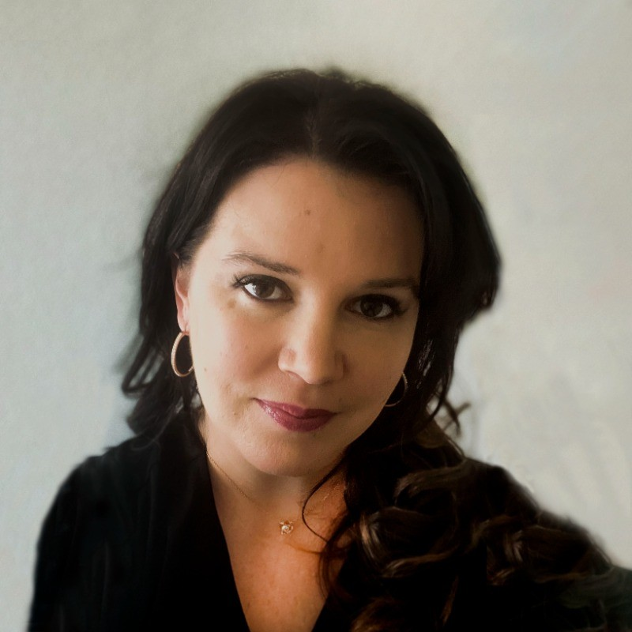
Jo Aiken graduated from the University of North Texas in 2014 with an M.A. in Applied Anthropology. Her path to anthropology began with a question that grew from an early interest in space exploration and the people who make it possible. During three summers in high school, Jo interned at NASA’s Johnson Space Center, where she worked in different areas of the Mission Operations Directorate. She observed space shuttle operations from the Mission Control Center, monitored data, and participated in simulations alongside engineers and astronauts.
It was during one of these experiences that Jo began thinking about how people from different cultures interact with technology and systems. While observing a checkout of a Space Station Freedom module, which later became part of the International Space Station, she overheard two engineers debating the color of a warning light. One argued that it should be red, while the other argued for yellow. The discussion centered on an important question: Would astronauts from different countries interpret the colors and levels of urgency in the same way? The experience stayed with Jo and eventually helped shape the research questions that brought her to anthropology. It also became part of her graduate school application and later her doctoral research.
Today, Jo describes herself as a “Space Anthropologist,” although her official title is Senior Experience Research Manager at Planet Labs, PBC. Her work includes user experience research, customer insights, and market research. Her career has taken her through a variety of professional roles, and she has found that anthropology continues to shape the way she approaches each one.
Jo’s understanding of anthropology has also changed since she began graduate school. Early in her studies, she thought being an anthropologist meant primarily conducting ethnography. Over time, she came to see anthropology as much more than a specific research method. For Jo, anthropology provides a way of seeing and engaging with the world—one that encourages empathy, considers the larger context surrounding a problem, and seeks to understand people's experiences and perspectives.
This perspective has remained valuable throughout her career, even when her job titles have not included the word “anthropologist.” Jo notes that industry positions rarely focus entirely on ethnography in the way academic anthropology programs might. Instead, anthropological methods are one part of a broader set of research tools. What makes the greatest difference is the perspective an anthropologist brings to their work: the ability to understand people, look at problems from multiple angles, and recognize the cultural and human factors that shape how people interact with technology and organizations.
Jo’s career offers an example of how an anthropology degree can lead to work in unexpected places. Her journey from NASA internships to graduate study at UNT and eventually to experience research in the space and technology industries demonstrates how anthropology can be applied across different fields. Her story also highlights an important lesson for anthropology students: you may not always have “anthropologist” in your job title, but the way you think, ask questions, and understand people can continue to shape your work wherever your career takes you.
Mireilly Ann Rosado-Bonilla
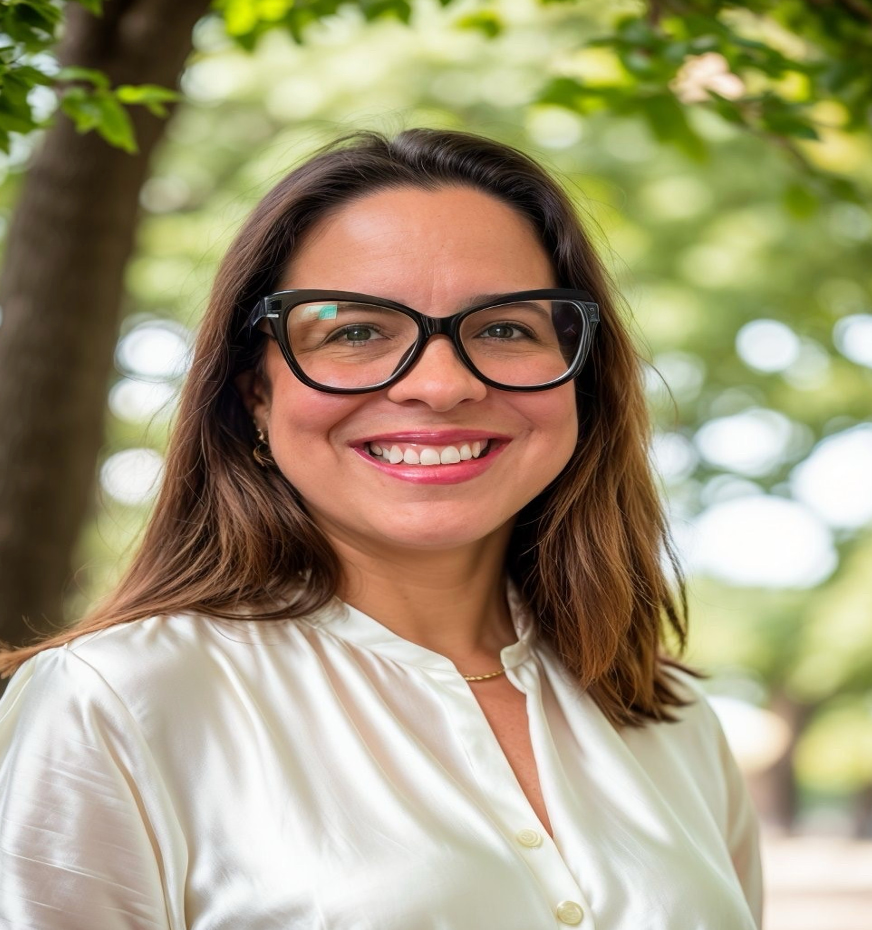
Mireilly Ann Rosado-Bonilla graduated from the University of North Texas in May 2015 with a degree in Applied Health and Product Design, with a focus on Health. Today, she is a Senior Director of Research & Development at Procter & Gamble (P&G), where she has spent the past 10 years working on the design and development of Family Care products. Her work brings together science, product design, and an understanding of the social and cultural factors that influence how people use products in their everyday lives, particularly in the kitchen.
Mireilly’s interest in anthropology grew from her love of both science and people and her desire to make a meaningful difference. She initially considered studying psychology, but she became more interested in looking beyond the individual to understand human interactions, communities, material culture, and the systems of meaning that shape everyday life. She recognized that this perspective could bring valuable insights to industry and product design, where understanding people's experiences and needs is essential to creating useful and meaningful products.
The lessons Mireilly learned through applied anthropology continue to influence both her professional and personal life. At P&G, she has used her anthropological perspective to help grow product brands while also building her career to the executive level. She also credits anthropology with helping her become a better listener, parent, and colleague. Her training taught her to ask questions, avoid assumptions, remain open to different perspectives, and continue learning. She emphasizes the importance of balancing confidence with humility, noting that while confidence can help people grow, arrogance can become a barrier to innovation and strong relationships.
For students interested in applying anthropology in their careers, Mireilly encourages them to embrace the journey with curiosity, humility, confidence, and a commitment to continued growth. Her career demonstrates how an anthropological perspective can contribute to innovation and product development while also providing skills that are valuable far beyond the workplace. Through her work, Mireilly continues to show how understanding people and culture can help create products and solutions that better fit the realities of everyday life.
Mia Rook
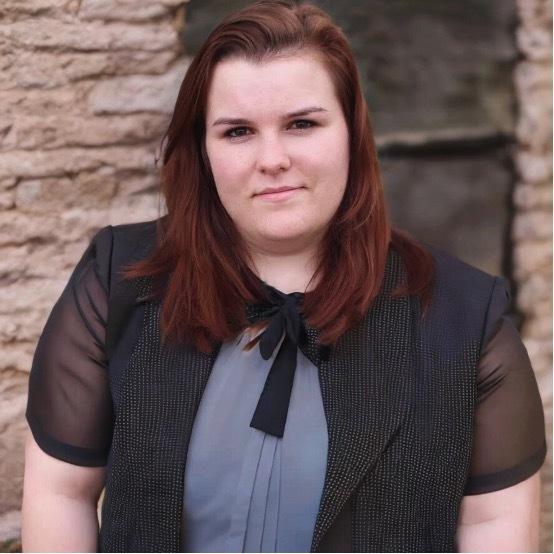
Mia Rook graduated from the University of North Texas in May 2018, earning both a Bachelor of Arts in History and a Bachelor of Science in Anthropology. Although she initially entered the program with an interest in archaeology, she quickly discovered a passion for cultural anthropology during her first semester. That experience shaped both her academic journey and the career she would pursue after graduation.
Today, Mia serves as an Educator and Historian with the Texas Historical Commission, where she leads the education department at one of the state's historic sites. Since joining the commission, she has dedicated her work to helping visitors better understand the rich history and diverse communities of Texas. Alongside her professional career, Mia continues to expand her education by pursuing her second master's degree and a Ph.D., which she expects to complete in 2028.
Mia credits her anthropology education with giving her the tools to better understand the connections between history, culture, and the people she works with every day. Her training allows her to interpret historical events through a broader cultural and social perspective, helping her create meaningful learning experiences for visitors from many different backgrounds.
The lessons she learned at UNT continue to influence both her career and her everyday life. Anthropology taught her to approach the world with curiosity, empathy, and an open mind. Rather than making assumptions, she strives to understand people's experiences and perspectives, recognizing that every individual has a unique story to tell. This way of thinking has strengthened her ability to connect with others and has become an essential part of both her professional and personal life.
For students considering a future in anthropology, Mia encourages them to embrace every opportunity the discipline offers. She believes anthropology opens doors to self-discovery, lifelong learning, and a deeper appreciation for the world and the people in it. She shares that there is rarely a day when she doesn't view something through an anthropological lens, and she hopes future students will discover how profoundly the field can shape both their careers and their lives.
Amaris Charles Rosado
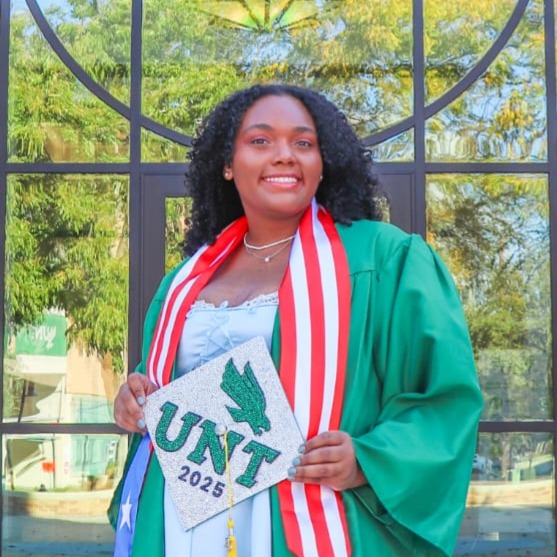
After graduating in December 2025, Amaris Charles Rosado will serve as an English
Teaching Assistant (ETA) in Thailand. In this role, they hope to help students build
confidence in their English skills while engaging with the community through cultural
exchange. They are excited for the opportunity to immerse themselves in another culture
and apply the knowledge gained through UNT’s Anthropology department to better understand
how language, community, and lived experience shape the way people see the world and
access healthcare.
Heather Roth
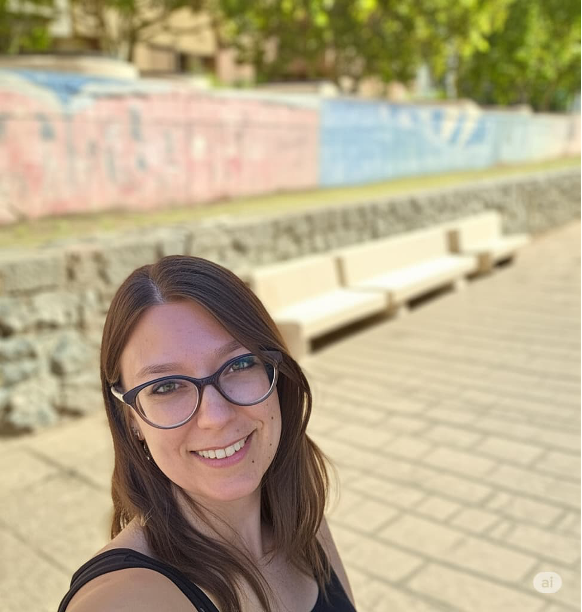
Heather Roth, who graduated from UNT in December 2016 with an MA in Applied Anthropology focused on Business, Technology, and Design, discovered her passion for anthropology at an early age. At just 11 years old, she attended a summer camp course on “Ancient Lost Cities,” where she learned from archaeologist Dr. Juris Zarins about the discovery of the lost city of Ubar. That experience sparked a lifelong curiosity about culture and human behavior. During her undergraduate studies, she became especially interested in cultural and linguistic anthropology and later combined that passion with an interest in technology. After encountering too many frustrating user experiences with websites and software, she was motivated to help design better, more user-friendly systems. Her graduate studies at UNT allowed her to focus on usability and apply mixed methods research to better understand how people interact with technology.
Today, Heather works as a Lead UX Researcher at Genesys, where she leads strategic research projects that help improve contact center software used by companies around the world. Her work focuses on understanding the experiences of people who use these systems, including agents, supervisors, and administrators. She also contributes to developing analytics and measurement programs and is currently exploring how to design for and with artificial intelligence. Outside of her professional work, Heather is active in a community orchestra and enjoys spending time with her family.
Heather credits her anthropology degree as a key factor in launching her career. Her background in ethnographic research, along with skills in organization, research design, and thematic analysis, has helped her stand out in the field of user experience research. Anthropology also provided her with a diverse set of research methods and the ability to conduct thorough literature reviews, both of which continue to be valuable in her work.
Beyond her career, Heather uses anthropology in her everyday life. She emphasizes the importance of asking human-centered questions, understanding different perspectives, and recognizing personal bias. These skills have helped her connect with people from diverse backgrounds and approach conversations with curiosity and empathy. She has also applied her skills in volunteer work, including conducting research for a community orchestra to better understand its members and support meaningful improvements.
For students interested in applying anthropology in their careers, Heather encourages flexibility and adaptability, especially in corporate environments. She suggests combining anthropological methods with design thinking to create stronger insights and solutions, while always maintaining a strong commitment to ethics. She also reminds students not to underestimate the importance of organization and note-taking, as these foundational skills are critical in any professional setting. Above all, her journey highlights how anthropology can open doors to impactful careers while helping people better understand and connect with the world around them.
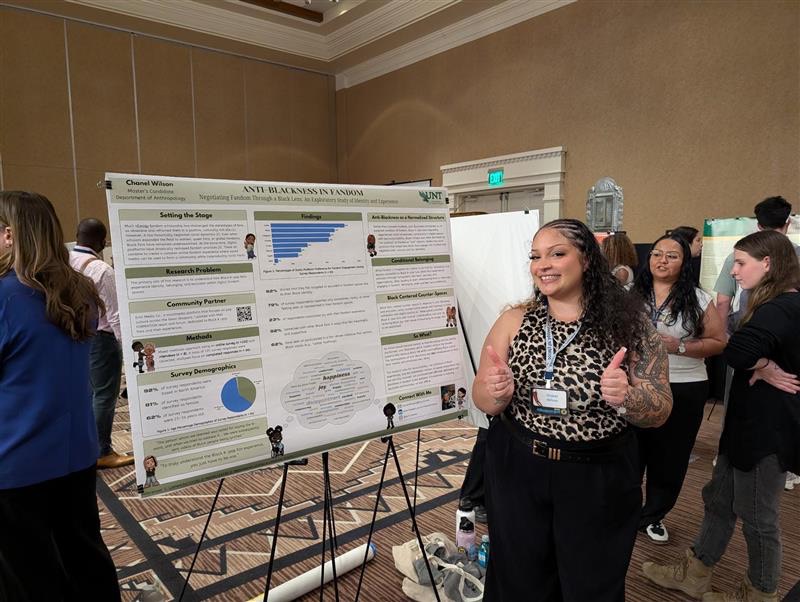
Chanel Wilson
We are so proud of Chanel Wilson, Master Candidate in Applied Anthropology at the University of North Texas, for winning one of the Society for Applied Anthropology's Student Poster Awards.
Tim Henderson
We are proud to recognize Anthropology grad student Tim Henderson, who has been selected as the recipient of a new award presented annually by the Society for Applied Anthropology. His paper, “The Times that Bind: Factors That Anchor Rural Nurses in Place,” was chosen from a large pool of submissions from both graduate and undergraduate students in the United States and abroad. The competition was juried by a panel of senior social scientists. As part of the award, Tim will receive a cash prize and travel support to attend the upcoming Society for Applied Anthropology Annual Meeting, where he will present his research.
Professor Melissa Nelson
CONGRATULATIONS go to our own Professor Melissa Nelson for being awarded the “James H. McDonald Leadership Fellowship” through the Society
for Applied Anthropology.
From the SfAA website: "This Leadership Development Program aims to strengthen anthropology’s position in
higher education by enhancing the institutional knowledge and leadership skills of
anthropology faculty. With a deeper understanding of the language, culture, and structures
of university administration and governance, anthropology faculty will be better positioned
to articulate the impact and communicate the value of anthropology to their universities,
students, and the public."
Erica Hawvermale

Erica Hawvermale earned her Master of Science in Applied Anthropology in 2020. Since then, she has worked in research and program evaluation.
In February 2022, Erica joined the D’Aniello Institute for Veterans and Military Families (IVMF) at Syracuse University as an Evaluation Associate. She now serves as a Senior Evaluation Associate, collaborating with several military-serving nonprofits on evaluation and capacity-building projects.
Outside her work at IVMF, Erica also leads evaluation efforts for Our Military Kids. While continuing in these roles, she is pursuing her Ph.D. in Evaluation, Measurement, and Research at Western Michigan University, beginning this fall.
Erica is also active in professional service. She serves as the Professional Development and Programming Committee Co-chair for the National Association for the Practice of Anthropology (NAPA).
Erica's LinkedIn Erica's Website
Lisa Quirk
In December 2014, one of our UNT Anthropology alumni completed her MS in Applied Medical Anthropology along with an MPH—a combination that would shape a meaningful and impactful career. Drawn to anthropology by a lifelong curiosity about people, culture, and the deeper “why” behind human behavior, she followed a path guided by the idea that if she could do anything in the world, she would want to understand how people live, think, and evolve.
Today, she serves as a Clinical Research Manager at UT Southwestern, where she oversees more than 40 studies, including large multi-million-dollar projects across multiple research sites. She credits her anthropology background for helping her get there—both through the strong network she built during graduate school and through the analytical, communication, and learning skills she developed along the way. Anthropology taught her how to speak the language of academia, navigate complex systems, and approach problems with curiosity and adaptability.
The value of anthropology shows up in her daily life, too. Whether she’s observing how different clinical teams approach challenges, navigating the micro-cultures within a large medical environment, or encouraging her diverse staff to adapt to new changes, she finds herself constantly drawing on anthropological perspectives. It even helps her reflect on her own positionality and assumptions.
For current and future anthropology students, she offers honest and encouraging advice: be flexible, adaptable, and realistic about the roles you step into. Experience matters, and so does understanding the expectations and constraints of funded work. While not every career mirrors the romanticized fieldwork of early anthropologists, applied work can have tremendous impact. In her own career, she has helped cure thousands of people of Hepatitis C at no cost to them and contributed to shaping national cancer screening recommendations—work she describes as pretty incredible.
Her journey is a powerful reminder of what applied anthropology can do and the real-world change it can create. If you ever wondered where an anthropology degree can take you, her story is an inspiring example.
Micah J. Fleck
 Micah J. Fleck earned his MS in Applied Anthropology from UNT in 2024. Before joining
the program, he completed a BA in Anthropology at Columbia University and an Ed.M
in Human Development at Harvard University. Micah is also an accomplished author and
scholar, having published multiple books—including Anthropology for Beginners, an illustrated introduction to the field, and Privileged Populists: Populism in the Conservative and Libertarian Working Class—as well as several journal articles. In 2025, he began pursuing his Ph.D. in Anthropology
at the London School of Economics and Political Science, continuing his work in research,
writing, and expanding public understanding of anthropology.
Micah J. Fleck earned his MS in Applied Anthropology from UNT in 2024. Before joining
the program, he completed a BA in Anthropology at Columbia University and an Ed.M
in Human Development at Harvard University. Micah is also an accomplished author and
scholar, having published multiple books—including Anthropology for Beginners, an illustrated introduction to the field, and Privileged Populists: Populism in the Conservative and Libertarian Working Class—as well as several journal articles. In 2025, he began pursuing his Ph.D. in Anthropology
at the London School of Economics and Political Science, continuing his work in research,
writing, and expanding public understanding of anthropology.
Joshua Liggett
 Joshua Liggett earned his MA in Applied Anthropology from UNT in 2014, with a focus
on the Anthropology of Education, evaluation work, and an applied research project
examining the role of nerd and geek identities in STEM degree completion. His interest
in anthropology was sparked early on through his love of Star Trek: The Next Generation, where Captain Picard’s dual identity as a scientist and anthropologist helped shape
his academic path after an initial attempt at physics. After graduating, Joshua worked
in several evaluative and applied roles within behavioral health and public service
agencies and now serves as a Quality Specialist at UC San Diego Health’s Center for
Transplantation. In this role, he uses anthropological approaches to support process
improvement initiatives and analyze patient events. Joshua emphasizes that anthropology
training provides critical skills in evaluation, facilitation, and systems analysis
that translate directly into applied settings. He continues to draw on theoretical
frameworks that explore how knowledge, structures, and decision-making intersect in
everyday work, and he encourages students to identify meaningful industries, learn
their professional language, align their education and internships accordingly, and
seek out mentors—such as those available through the National Association for the
Practice of Anthropology.
Joshua Liggett earned his MA in Applied Anthropology from UNT in 2014, with a focus
on the Anthropology of Education, evaluation work, and an applied research project
examining the role of nerd and geek identities in STEM degree completion. His interest
in anthropology was sparked early on through his love of Star Trek: The Next Generation, where Captain Picard’s dual identity as a scientist and anthropologist helped shape
his academic path after an initial attempt at physics. After graduating, Joshua worked
in several evaluative and applied roles within behavioral health and public service
agencies and now serves as a Quality Specialist at UC San Diego Health’s Center for
Transplantation. In this role, he uses anthropological approaches to support process
improvement initiatives and analyze patient events. Joshua emphasizes that anthropology
training provides critical skills in evaluation, facilitation, and systems analysis
that translate directly into applied settings. He continues to draw on theoretical
frameworks that explore how knowledge, structures, and decision-making intersect in
everyday work, and he encourages students to identify meaningful industries, learn
their professional language, align their education and internships accordingly, and
seek out mentors—such as those available through the National Association for the
Practice of Anthropology.