 University of North Texas

Who is being asked to participate?
We are inviting adults age 21 years to 70 years from Denton County to participate
in this study.
What will I be asked to do?
This is a 3-year study of stress and atherosclerosis. Participants will be examined
in year 1 and then again 2 years later. Study participants will undergo the following:
 Medical Exams
Participants will undergo a brief medical exam with a doctor. The exam will include
questions about your medical history, medications, and heart health. Routine exams
such as measuring your blood pressure will also be performed. A blood draw will also
be performed to examine other aspects of risk such as cholesterol levels.
 Carotid Artery Ultrasound Scan
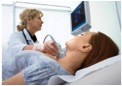
The ultrasound scan is a simple, routine, and pain-free procedure. You will lie on
your side while the doctor moves the ultrasound probe across your neck. The ultrasound
probe uses sound waves to create a picture of your arteries. This procedure typically
takes 15 to 30 minutes.
 Survey
Participants will be asked to complete a series of questionnaires regarding their
experiences of stress, personality, and relationships.
Daily Monitoring
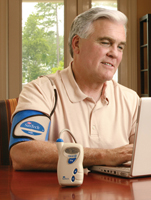
We are interested in your daily experiences of stress and blood pressure.
Participants will be fitted with a portable blood pressure monitor and given a smart phone. The blood pressure monitor is small and is worn under clothing. It will automatically measure your blood pressure throughout the day.
Each time a blood pressure reading is taken, you will be asked to answer a set of questions using an "app" on the smart phone. The questions will ask you about where you were, what you were doing, and what your mood was when your blood pressure was taken.
The researchers will teach you how to use the blood pressure monitor and smart phone.
Compensation:
In appreciation for your participation, you will receive $100 for participating in
the first year of data collection. You will receive an additional $150 for participating
in the 2-year follow-up. In addition, we are happy to send any medical tests to your
doctor free of charge with your permission.
Benefits to Science:
This study is a response to a call from the National Institutes of Health (NIH). Through this study, we hope to improve understanding of how stress influences atherosclerosis.
If our work is successful, it may lead to the development of better treatments to
combat heart disease.